Apple juice often looks like a harmless, healthy drink, especially when dogs show interest in sweet flavors. In everyday veterinary nutrition guidance, owners commonly ask about sharing small sips during hot weather or when a dog begs for human drinks. This guide gives a calm, vet-aligned answer in clear language, explains real risks, and helps dog owners choose safer options in 2026.
Can Dogs Drink Apple Juice?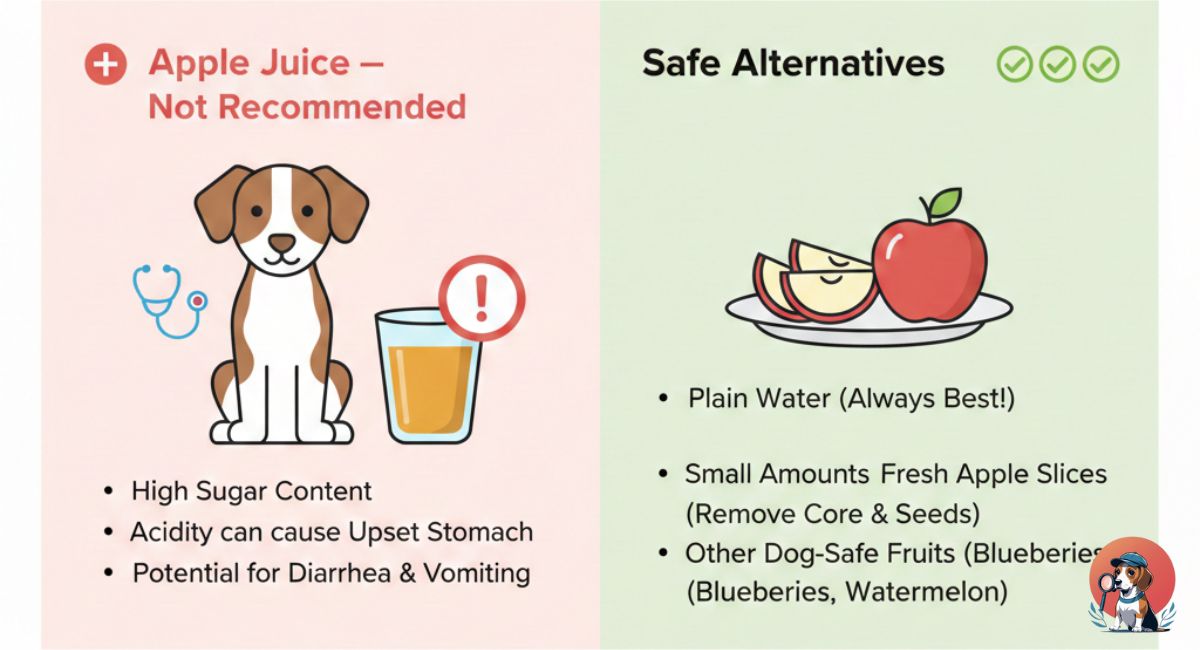
No, dogs should not drink apple juice regularly, and it is not recommended as part of a dog’s diet.
An occasional accidental sip is unlikely to cause harm, but apple juice offers no nutritional advantage for dogs. Most apple juices—especially store-bought varieties—contain concentrated sugars and lack fiber. Over time, regular exposure can contribute to weight gain, digestive upset, and dental problems. Current canine nutrition guidance continues to emphasize clean water as the only necessary daily drink for dogs.
What’s in Apple Juice?
Apple juice contains sugar, water, and small amounts of vitamins—but almost no fiber.
Most commercial apple juices include:
-
Natural fruit sugars (fructose)
-
Added sugars or concentrates (common in many brands)
-
Water
-
Trace amounts of vitamin C and potassium
-
Preservatives or stabilizers in processed products
What’s missing matters just as much:
-
No dietary fiber
-
No protein
-
No essential fats
-
No chewing or dental benefit
This imbalance explains why apple juice does not support a dog’s nutritional needs.
Is Apple Juice Bad for Dogs? 3 Health Risks of Apple Juice for Dogs
Yes, apple juice can become harmful when offered often or in large amounts.
1. High Sugar Load
-
Causes rapid blood sugar spikes
-
Increases the risk of weight gain
-
Not appropriate for dogs with diabetes or insulin sensitivity
2. Digestive Upset
-
Can lead to loose stools or gas
-
May trigger vomiting in sensitive dogs
-
Lacks fiber that helps regulate digestion
3. Dental Problems
-
Sugar fuels harmful oral bacteria
-
Encourages plaque and tartar buildup
-
Raises the likelihood of gum disease
Veterinary guidance consistently links sugary liquids with poor long-term metabolic health in dogs.
Why Shouldn’t Dogs Drink Apple Juice?
Dogs do not need sugary drinks, and apple juice disrupts a balanced diet.
Dogs are biologically adapted to hydrate with water. Apple juice:
-
Adds unnecessary calories
-
Encourages preference for sweet flavors
-
Reduces water intake
-
Provides minimal usable nutrition
Over time, this can contribute to unhealthy feeding habits.
Dangers of Feeding Apple Juice to Dogs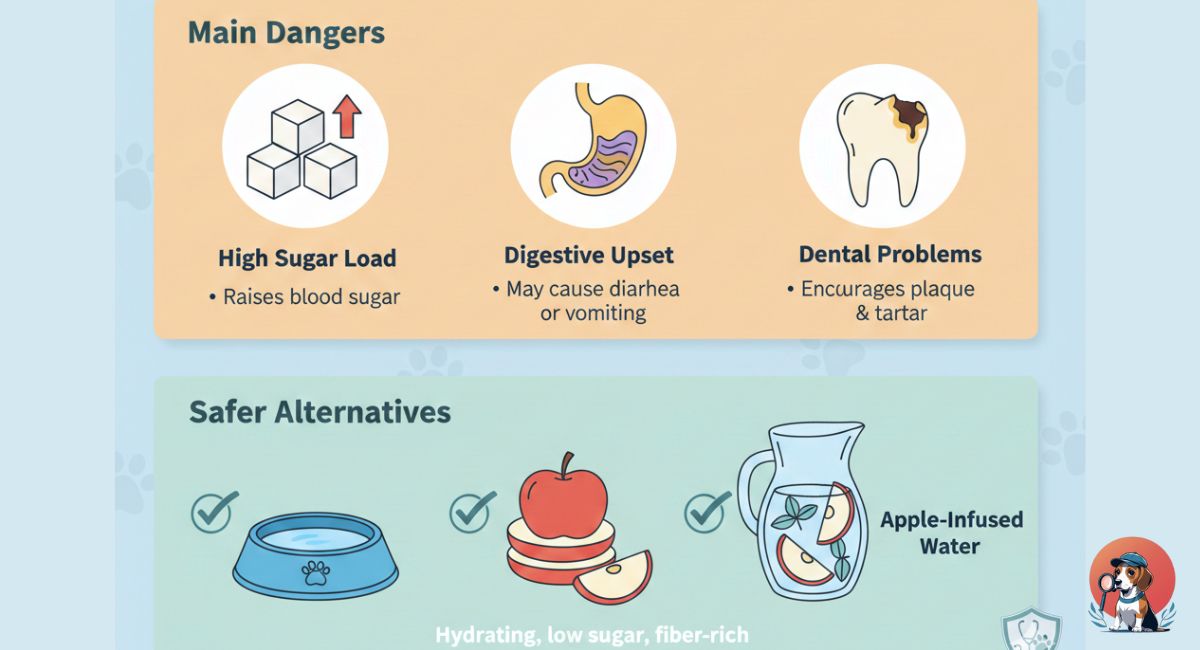
Risks increase with frequent or repeated exposure.
Potential concerns include:
-
Obesity
-
Blood sugar instability
-
Digestive stress
-
Tooth decay
-
Increased begging for sweet foods
Puppies, senior dogs, and smaller breeds are especially sensitive to sugary drinks.
What Are the Negatives of Apple Juice for Dogs?
The downsides clearly outweigh any minor benefit.
Key drawbacks:
-
Excess sugar
-
No fiber
-
No chewing stimulation
-
Often heavily processed
-
Sometimes contains additives
From a practical feeding standpoint, apple juice is inefficient and unnecessary.
Why Can Dogs Have Apples But Not Apple Juice?
Whole apples provide structure and fiber that juice removes.
Juicing apples:
-
Strips away fiber
-
Concentrates sugar
-
Eliminates chewing
-
Causes faster sugar absorption
Whole apples digest more slowly and support healthier blood sugar control.
Can Dogs Eat Apples?
Yes, dogs can eat apples in moderation.
Apples are generally safe when:
-
Seeds are removed
-
The core is removed
-
Served fresh and raw
-
Offered in small portions
They are often used as a lower-fat alternative to processed treats.
Are Apples Good for Dogs?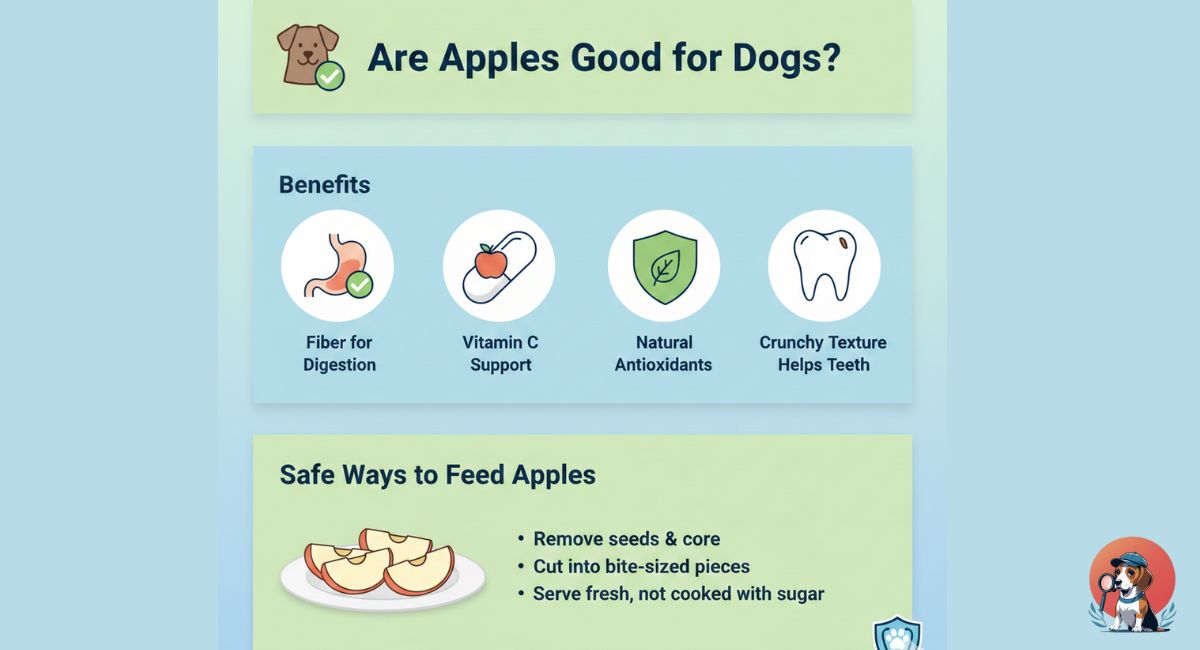
Yes, apples can be a healthy occasional snack.
Benefits include:
-
Fiber for digestion
-
Vitamin C support
-
Natural antioxidants
-
Crunchy texture that supports dental health
This makes apples a better option than sugary foods or drinks, similar to how freeze-dried bananas for dogs are sometimes used as controlled treats.
Are Apples Bad for Dogs?
Apples are only problematic when fed incorrectly or excessively.
Possible issues:
-
Too much fruit may cause diarrhea
-
Seeds contain natural toxins
-
Large chunks pose a choking risk
Balanced portions and preparation prevent these problems.
How Many Apples Can a Dog Eat?
Portion size depends on the dog’s size.
| Dog Size | Safe Apple Portion |
|---|---|
| Small dogs | 1–2 thin slices |
| Medium dogs | 3–4 slices |
| Large dogs | Up to ½ small apple |
Apples should remain under 10% of daily calories.
How To Safely Feed Apples to Dogs
Safe preparation is essential.
Steps to follow:
-
Wash apples thoroughly
-
Remove seeds and core
-
Cut into small, manageable pieces
-
Serve raw, without sugar or spices
-
Avoid packaged apple products
Can dogs eat apple cores and seeds?
No, dogs should never eat apple cores or seeds.
Apple seeds contain amygdalin, which releases cyanide during digestion. Although toxicity depends on quantity, repeated exposure is unsafe. Cores also present a choking hazard.
How many apple seeds are toxic to a dog?
There is no safe amount.
General guidance:
-
Small dogs: extremely low tolerance
-
Medium dogs: a few seeds are still risky
-
Large dogs: higher tolerance, but still unsafe
Avoid seeds entirely.
Can I Give My Dog Homemade Apple Juice?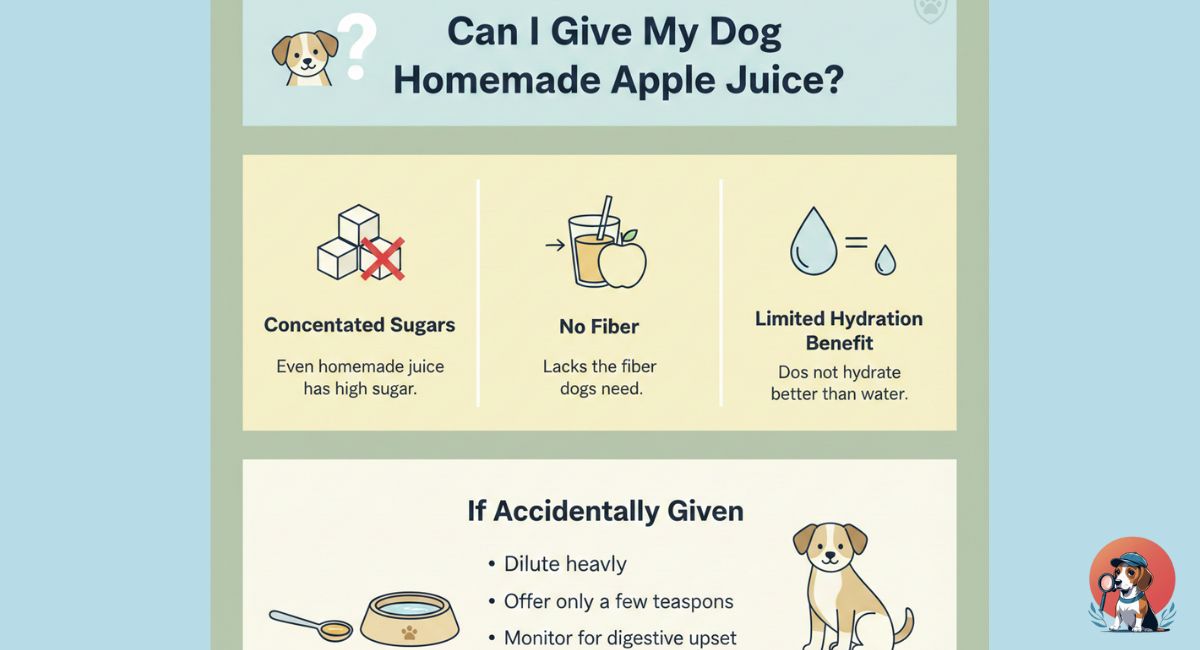
Homemade apple juice is less processed, but it is still not recommended.
Even fresh juice:
-
Contains concentrated sugars
-
Lacks fiber
-
Does not hydrate better than water
If accidentally offered, dilute it heavily and keep portions very small.
Can Dogs Drink Apple Cider?
No, apple cider is not appropriate for dogs.
Apple cider, especially unfiltered or fermented types:
-
Contains more sugar
-
May include alcohol traces
-
Can irritate digestion
Is Frozen Apple Juice Mix Different?
No, frozen apple juice mix is not safer.
Frozen concentrates are often more processed and may include:
-
Highly concentrated sugars
-
Added flavor enhancers
-
Preservatives
Once diluted, they still lack fiber and carry the same concerns as bottled juice.
Organic Apple Juice Is the Best
Organic apple juice is slightly cleaner but still unsuitable.
While organic options reduce pesticide exposure, they still contain:
-
Concentrated sugars
-
No fiber
-
High calorie density
Organic whole apples are always safer than any juice.
My Dog Drank Apple Juice. What Should I Do Now?
Monitor your dog and return to the water.
Steps to take:
-
Stay calm if it was a small amount
-
Provide fresh water
-
Watch for digestive changes
-
Avoid further sugary foods
Contact a veterinarian if:
-
A large amount was consumed
-
Symptoms persist beyond 24 hours
-
Your dog has known health conditions
Safer Apple Juice Alternatives
Water and whole foods are the safest options.
Better alternatives include:
-
Fresh water
-
Small apple slices (seed-free)
-
Apple-infused water with fruit removed
-
Ice cubes made from plain water
These are safer than sweet foods such as carrot cake, dried peaches, or other sugary snacks.
Why Whole Fruit Is Better Than Fruit Juice
Whole fruit supports digestion and metabolic balance.
Compared to juice, whole fruit:
-
Slows sugar absorption
-
Supports gut health
-
Encourages chewing
-
Helps control calorie intake
This principle applies broadly, just as with other foods dog owners ask about, such as whether barley is good for dogs or how often canned chicken should be used.
Refreshing Choices: Juices Safe for Your Dog
Most juices are unnecessary, but a few diluted options are safer.
Occasional choices:
-
Plain cucumber water
-
Unsalted bone broth (no onion or garlic)
-
Watermelon-infused water (seedless, rind removed)
Fresh water should remain the primary source of hydration.
Final Thoughts
Apple juice may seem harmless, but it does not support a dog’s health. High sugar content, lack of fiber, and digestive concerns make it a poor choice. Dogs do best with simple hydration and minimally processed foods.
FAQS
Q.1 Can dogs drink apple juice at all?
Dogs can have a very small accidental sip without harm, but apple juice is not recommended. It contains concentrated sugar and no fiber, which provides no health benefit for dogs.
Q.2 Is apple juice dangerous for dogs?
Apple juice is not toxic, but it can be harmful if given often or in large amounts. The high sugar content may lead to digestive upset, weight gain, or dental issues over time.
Q.3 What happens if my dog drinks apple juice by accident?
In most cases, nothing serious happens if it is a small amount. Offer fresh water and watch for mild stomach upset, such as loose stools or vomiting.
Q.4 Can puppies drink apple juice?
No, puppies should not drink apple juice. Their digestive systems are more sensitive, and sugary drinks can cause stomach upset more easily than in adult dogs.
Q.5 Is apple juice safe for senior dogs?
Apple juice is not a good choice for senior dogs. Older dogs are more likely to have weight, dental, or blood sugar concerns that sugary drinks can worsen.
Q.6 Can dogs drink apple cider instead of apple juice?
No, apple cider is not safer than apple juice. It often contains even more sugar and may upset a dog’s stomach.
Q.7 Why can dogs eat apples but not apple juice?
Whole apples contain fiber that slows sugar absorption and supports digestion. Apple juice removes that fiber and delivers sugar too quickly for a dog’s system.
Q.8 What can I give my dog instead of apple juice?
Fresh water is always the best option. Small pieces of fresh apple or plain fruit-infused water can be safer choices when offered occasionally.
Conclusion
Dogs should not drink apple juice as part of a normal or routine diet. Fresh water remains the best hydration choice, and whole apples in moderation are a safer treat that better supports long-term canine health.