Yes, dogs can safely eat baby corn in moderation. Unlike mature corn, baby corn is harvested before the ear develops a woody, indigestible core. This means the entire vegetable—including the soft center—is safe for canine consumption. It is low in calories, high in insoluble fiber, and provides a satisfying crunch without the life-threatening blockage risks of traditional corn cobs.
What Is Baby Corn?
Baby corn is a cereal grain produced from regular maize plants (Zea mays). The primary difference lies in the harvest timing. Farmers pick these ears while they are still immature and unfertilized, usually just as the silk emerges.
At this stage, the plant has not yet developed high levels of amylopectin (starch) or lignin, the structural polymer that makes mature corn cobs hard and dangerous for dogs. Because it is harvested early, baby corn functions nutritionally more like a non-starchy vegetable than a grain.
Common Forms of Baby Corn:
-
Fresh: Found in the produce aisle; the most nutrient-dense option.
-
Frozen: Retains most vitamins; must be thawed or cooked to prevent dental fractures in small dogs.
-
Canned/Jarred: Often stored in a high-sodium brine; requires thorough rinsing.
Assessing the Safety of Baby Corn for Dogs
When evaluating whether a vegetable is “safe,” veterinarians look at two things: toxicity and physical hazard. Baby corn passes both tests, but with specific caveats regarding preparation.
The “Anti-Blockage” Benefit
The number one reason veterinarians warn against corn is the “cob” factor. Mature corn cobs are composed of cellulose and lignin that a dog’s digestive enzymes cannot break down. These often lodge in the small intestine, requiring expensive emergency surgery. Baby corn cobs are soft and digestible, meaning they break down easily in the stomach.
Potential Digestive Risks
While non-toxic, the high hemicellulose (fiber) content can be a double-edged sword. If a dog’s gut microbiome isn’t used to raw vegetables, sudden ingestion can lead to:
-
Osmotic Diarrhea: Drawing too much water into the colon.
-
Flatulence: Bacterial fermentation of the fibers in the large intestine.
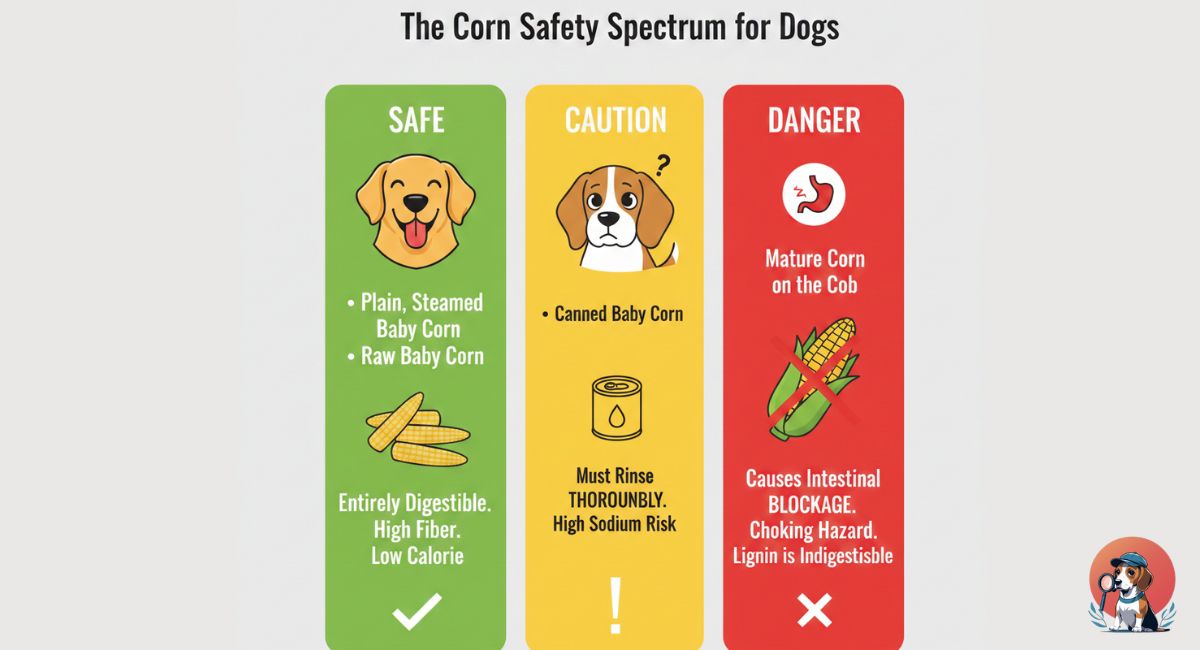
Green Zone: Plain, steamed baby corn (Safe for all).
Yellow Zone: Canned baby corn (Rinse first).
Red Zone: Mature corn on the cob (High blockage risk).
Nutritional Value and Health Implications
Baby corn is a low-glycemic treat, making it an excellent alternative to sugary fruits or high-fat commercial biscuits.
Comparative Nutritional Table: Baby Corn vs. Mature Sweet Corn
| Nutrient (per 100g) | Baby Corn (Fresh) | Mature Sweet Corn | Impact on Dog Health |
| Calories | 26 kcal | 86 kcal | Weight management support. |
| Total Sugars | 0g – 1g | 6.3g | Safer for diabetic dogs. |
| Fiber | 2.8g | 2.0g | Aids in bowel regularity. |
| Folate (B9) | 31 mcg | 42 mcg | Supports DNA and red blood cells. |
| Safety Rating | — | — | Physical safety for the GI tract. |
Advanced Dietary Insights: The Science of Canine Digestion
Dogs are scavenging carnivores, which means their digestive tract is shorter than a human’s. When we feed them fibrous vegetables like baby corn, we are looking at two types of fiber:
-
Insoluble Fiber (Cellulose): This is what makes baby corn crunchy. It doesn’t dissolve in water and helps push food through the intestines. This is perfect for dogs struggling with constipation or anal gland issues.
-
Soluble Fiber: This turns into a gel-like substance, slowing down sugar absorption. This is why baby corn is a safe “low-glycemic” treat for diabetic dogs.
How to Feed Baby Corn to Dogs Safely
To maximize the benefits and minimize the risks, follow these expert-level preparation steps.
Preparation Methods
-
Steaming: The gold standard. It softens the fibers slightly without leaching out water-soluble vitamins.
-
Raw: Best for dental stimulation. The mechanical action of chewing raw baby corn can help scrape away mild plaque.
-
Pureed: Best for senior dogs with missing teeth or sensitive stomachs.
Safe Treat Ratio by Dog Weight (10% Rule)
| Dog Size | Weight | Max Baby Corn Serving |
| Toy/Small | 5–20 lbs | 1/2 to 1 piece (chopped) |
| Medium | 21–50 lbs | 2 pieces |
| Large/Giant | 51+ lbs | 3–4 pieces |
DIY Recipes: Preparation Ideas for 2026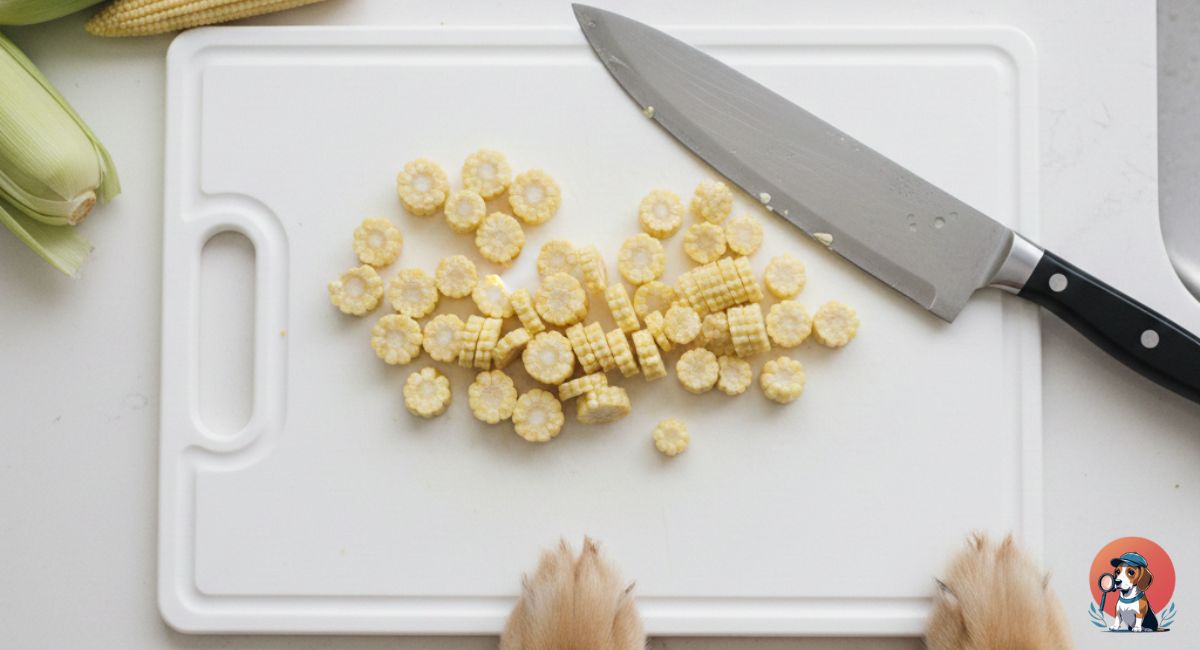
Expert pet parents in 2026 don’t just throw raw veggies in a bowl. Here is how you can increase the biological value:
1. The “Baby Corn Crunch” Topper
Finely dice 3 stalks of fresh baby corn and mix with 1 tablespoon of plain, xylitol-free Greek yogurt. Freeze for 30 minutes. This provides probiotics for gut health and mechanical crunch for teeth.
2. Dehydrated “Chew Sticks.”
Slice baby corn length-wise and place in a dehydrator at 125°F (52°C) for 6–8 hours. This creates a leathery texture that keeps dogs occupied, similar to a dental chew but without the hidden fats.
Case Study: The “Stir-Fry” Emergency
Scenario: Your dog steals a piece of baby corn out of your takeout stir-fry. Is it an emergency?
The Expert View: The baby corn itself is not the problem. The danger lies in the Allium family. Most stir-frys use:
-
Onion and Garlic: These contain N-propyl disulfide, which causes oxidative damage to red blood cells (Heinz Body Anemia).
-
Sodium: Takeout is loaded with soy sauce, which can lead to salt toxicosis.
Action Plan: If the corn was coated in heavy sauce, monitor for vomiting, pale gums, or dark urine. If it were a small, “clean” piece, your dog will likely be fine.
Deep Dive: Pancreatitis & Medical Concerns
Can Dogs with Pancreatitis Eat Bananas?
Pancreatitis is the inflammation of the pancreas, often triggered by high-fat meals. The pancreas produces Lipase (for fats) and Amylase (for carbs).
-
The Verdict: Yes, in moderation. Bananas are virtually fat-free, making them a “pancreatitis-safe” snack.
-
Expert Tip: Use green-tipped bananas. They contain more “resistant starch,” which ferments slowly and doesn’t cause a rapid insulin spike, unlike overripe brown bananas.
Fruit & Veggie Safety Database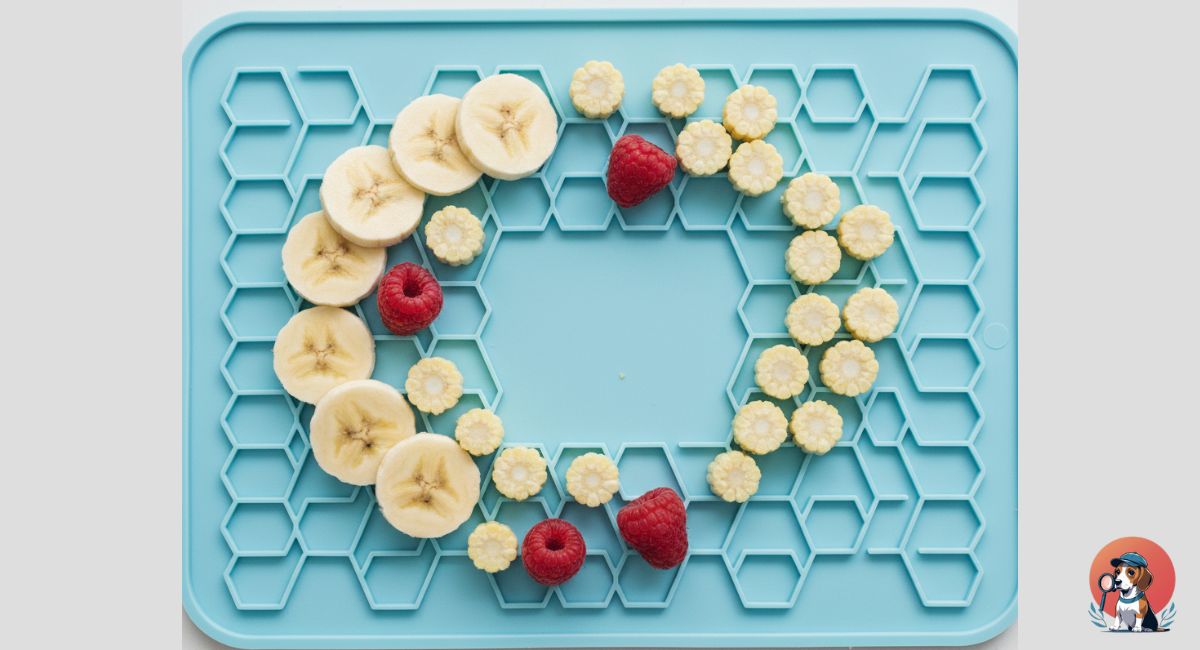
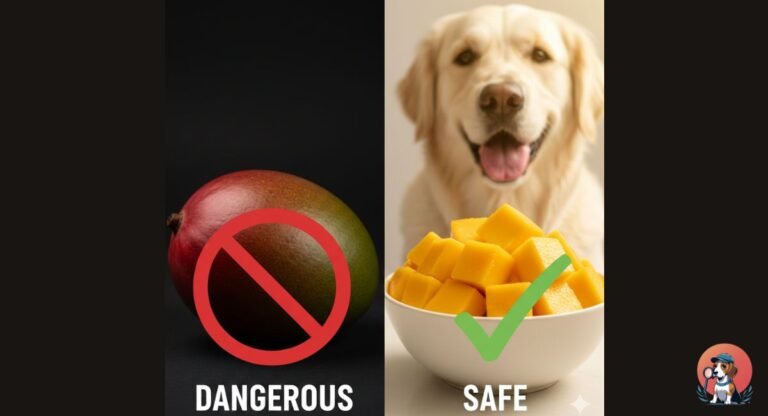
1. Can Dogs Eat Mango Skin?
No. Mango skins contain urushiol, the same organic oil found in poison ivy. While not all dogs react, it can cause localized dermatitis or oral irritation. Additionally, the skin is loaded with lignified fibers, making it a choking hazard.
2. Can Dogs Eat Figs?
Figs contain Ficin (a proteolytic enzyme) and ficusin. While the fruit is okay in tiny amounts, the sap and leaves of the fig tree are highly toxic and can cause phototoxic dermatitis. Limit fruit to one per week.
3. Can Dogs Eat Raspberries?
Raspberries are excellent for senior dogs due to Ellagic Acid and Anthocyanins. They contain trace amounts of natural xylitol, but you would need to feed a massive amount to cause harm. Keep servings under 1 cup for large dogs.
4. Can Dogs Eat Golden Berries?
Avoid. Golden berries are part of the Solanaceae (nightshade) family. They contain solanine, a glycoalkaloid poison. Symptoms of toxicity include hypersalivation, GI distress, and slowed heart rate.
Signs of Adverse Reactions in Dogs
-
Facial Swelling: A sign of acute anaphylaxis.
-
Excessive Itching: Indicating a food sensitivity.
-
Regurgitation: The corn comes back up undigested immediately.
-
Borborygmus: Loud stomach gurgling caused by fiber fermentation.
FAQs
Q1: Can dogs eat baby corn with the silk still on?
Yes. Corn silk is a source of potassium and is often used in herbal medicine for urinary health. It is safe and soft.
Q2: Is baby corn a grain or a vegetable?
Botanically, it is a grain. Culinary and nutritionally, it is treated as a low-starch vegetable due to early harvest.
Q3: Can puppies eat baby corn?
Yes, but wait until 12 weeks of age. Their digestive systems are sensitive; introduce only one small “coin” at a time.
Q4: Does baby corn cause weight gain?
No. It is nearly 90% water and fiber, helping dogs feel full without adding significant calories.
Q5: Is baby corn better than carrots?
Both are good, but baby corn has lower natural sugar, making it superior for diabetic or obese dogs.
Conclusion
Baby corn is a “Super-Snack” for dogs in 2026. It bridges the gap between the satisfying crunch of a dangerous corn cob and the safety of a soft vegetable. By focusing on plain, steamed preparation and respecting the 10% treat rule, you provide essential B vitamins and fiber safely.