
Yes, dogs can have barley when it is cooked properly and fed in moderation. Barley is a whole grain that provides fiber and slow-digesting energy, making it useful for some dogs when used correctly. This guide quickly explains what is safe, what to avoid, and how to feed barley responsibly, including the important difference between barley grain and barley grass.
Many dog owners see barley listed in dog food ingredients or consider adding it at home. While barley can be beneficial, it is not suitable for every dog, and it must be prepared correctly to avoid digestive issues or safety risks.
What is Barley?
Barley is a cereal grain commonly used in human foods, livestock feed, and some commercial dog foods. It is considered a complex carbohydrate and contains both soluble and insoluble fiber.
Barley naturally provides:
-
Dietary fiber (including beta-glucans)
-
Plant-based protein
-
B-group vitamins
-
Minerals such as magnesium, iron, and selenium
-
Slow-digesting carbohydrates
In dog nutrition, barley is often used as a grain source that supports digestion and helps provide slow-digesting energy rather than quick sugar spikes.
Is Barley Grass Safe for Dogs?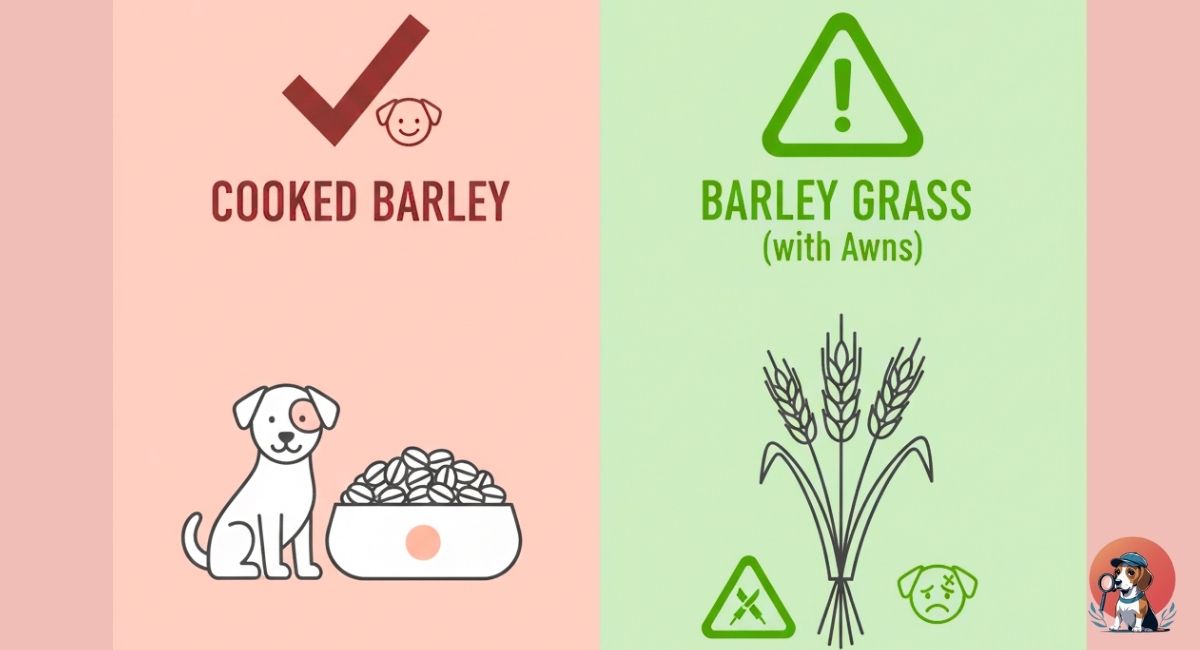
No, barley grass is not safe for dogs.
Barley grass refers to the young green shoots of the barley plant before it matures into grain. While it may look harmless, barley grass develops sharp seed awns that can cause serious physical injury to dogs.
Unlike cooked barley grain, barley grass:
-
Is not digestible
-
Can easily lodge in body tissues
-
Poses a physical injury risk rather than a nutritional concern
Dogs should never chew, eat, or play in areas where barley grass is present.
The Danger of Barley Grass for Dogs
Barley grass is dangerous because of its sharp, pointed awns that can attach to fur and penetrate the body.
Common dangers include:
-
Awns stuck in the gums or throat
-
Inhalation into the nose or airway
-
Injury to paws, ears, eyes, or skin
-
Migration under the skin leading to infection
-
Choking or breathing difficulties
Warning signs of exposure may include sneezing, coughing, head shaking, limping, excessive licking, swelling, or discharge. Barley grass exposure often requires veterinary attention and should always be prevented.
Can Dogs Eat Barley?
Yes, dogs can eat barley when it is fully cooked and served plain.
Cooked barley is:
-
Easier to digest than raw barley
-
Safer for the digestive system
-
Suitable as an occasional food addition
Barley should never be fed:
-
Raw or undercooked
-
Seasoned or salted
-
Mixed with onion, garlic, butter, or spices
From a veterinary nutrition perspective, barley works best as a supporting ingredient, not a replacement for complete dog food. It is most useful for dogs that benefit from added fiber or slower energy release.
Health Benefits of Barley for Dogs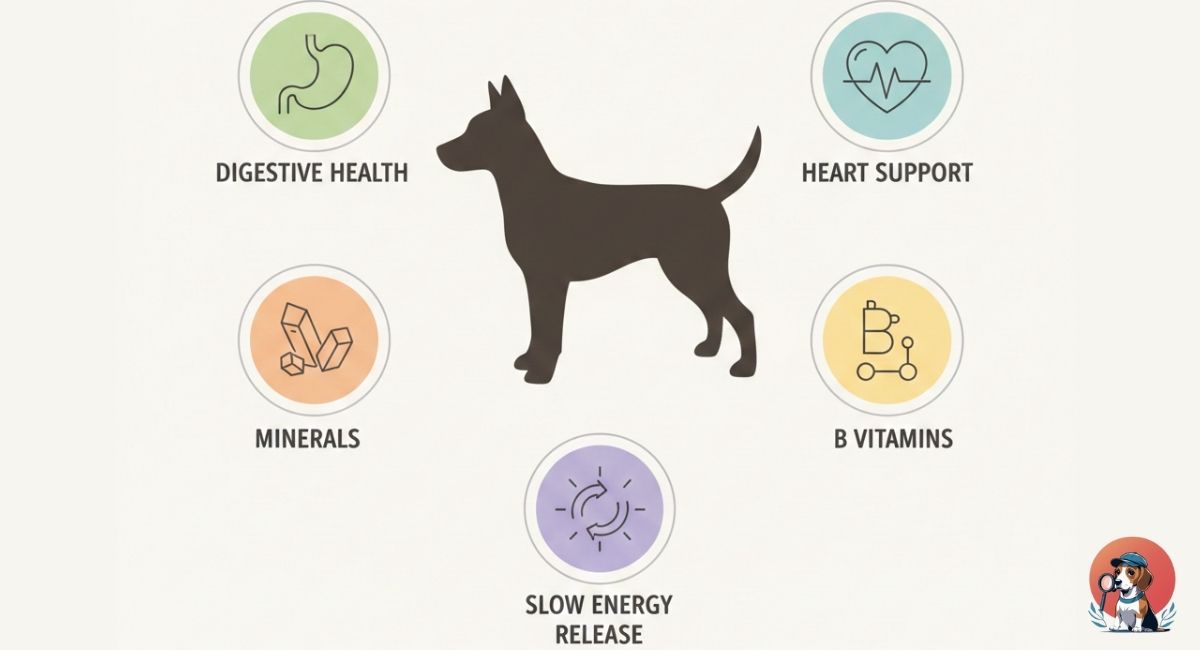
When used correctly, barley can support several aspects of a dog’s health. It is especially helpful for dogs that need improved digestion, weight control, or slow-digesting energy levels.
1. Improves Digestive Health
Barley is rich in soluble fiber, which supports healthy digestion.
Digestive benefits include:
-
Supporting regular bowel movements
-
Improving stool consistency
-
Feeding beneficial gut bacteria
-
Helping with mild constipation in some dogs
Barley should always be introduced slowly to avoid gas or loose stools.
2. Supports Heart Health
Barley contains beta-glucans, a type of fiber associated with cardiovascular support.
This may help:
-
Support healthy cholesterol levels
-
Promote better circulation
-
Assist weight management, which reduces strain on the heart
These benefits work best when barley is part of an overall balanced diet.
3. Provides Essential Minerals
Cooked barley supplies trace minerals that contribute to normal body function, including:
-
Magnesium for muscle and nerve health
-
Iron for oxygen transport
-
Selenium for immune support
Barley should complement, not replace, nutritionally complete dog food.
4. Rich Source of Vitamin B
Barley naturally contains B-complex vitamins such as:
-
Thiamine (B1)
-
Niacin (B3)
-
Pyridoxine (B6)
These nutrients help support energy metabolism, nervous system function, and overall vitality.
5. Good Alternatives for Diabetic Dogs
Barley has a lower glycemic impact than refined grains like white rice.
Potential advantages include:
-
Slower blood sugar release
-
Better appetite control
-
Longer-lasting energy
Dogs with diabetes should only be fed barley under veterinary guidance.
Risks of Feeding Your Dog Barley
Although barley is generally safe, some risks exist.
Possible risks include:
-
Grain intolerance or sensitivity
-
Digestive upset if fed in large amounts
-
Weight gain from excessive portions
-
Gluten sensitivity in rare cases
Signs of intolerance may include vomiting, diarrhea, gas, itching, or skin irritation. If any of these occur, barley should be removed from the diet.
Some Precautions While Feeding Barley to Your Dog
Before feeding barley, keep these precautions in mind:
-
Always cook barley until soft
-
Feed plain barley only
-
Introduce slowly
-
Avoid barley for dogs with known grain allergies
-
Use small portions
Barley should make up no more than a small part of a dog’s daily calories.
How To Cook Barley For Your Dog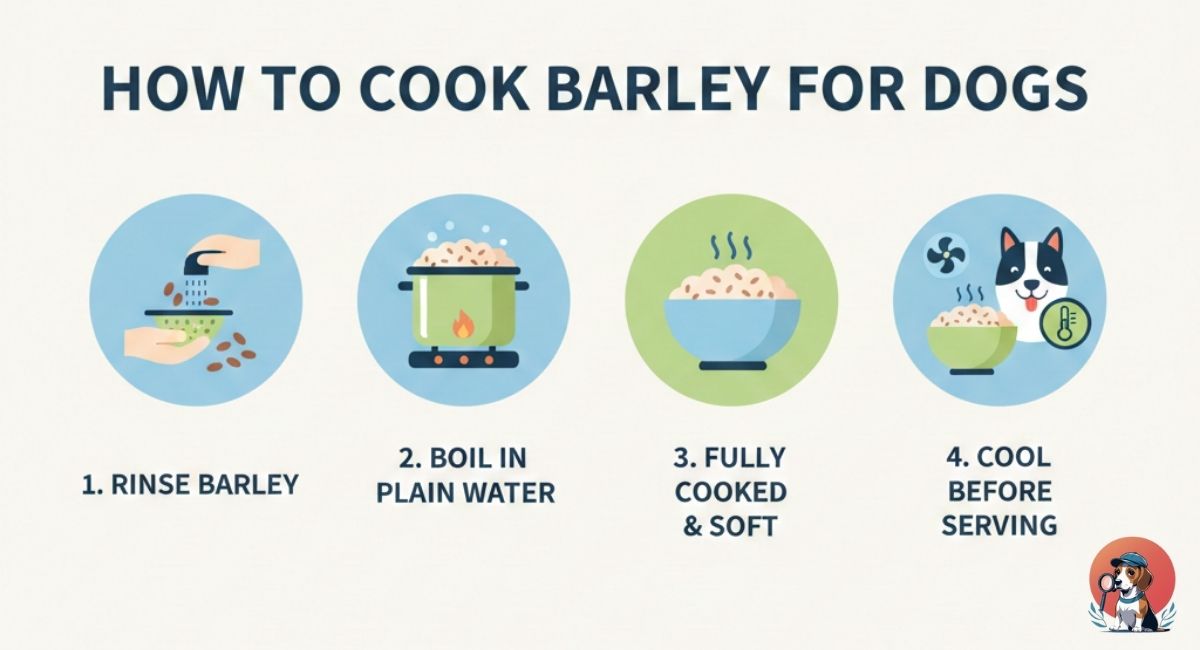
Proper preparation improves safety and digestion.
Safe cooking steps:
-
Rinse barley thoroughly
-
Boil in plain water
-
Cook until soft and fully expanded
-
Let it cool before serving
Do not add salt, oil, butter, spices, or seasoning.
How to Safely Introduce Barley into Your Dog’s Diet
Barley should be introduced gradually.
Suggested approach:
-
Start with 1 teaspoon mixed into regular food
-
Increase slowly over several days
-
Monitor stool quality and appetite
Dogs with sensitive digestion often tolerate barley better when it is well-cooked and mixed with familiar foods, rather than offered alone or in large portions.
Is Rice or Barley Better for Dogs?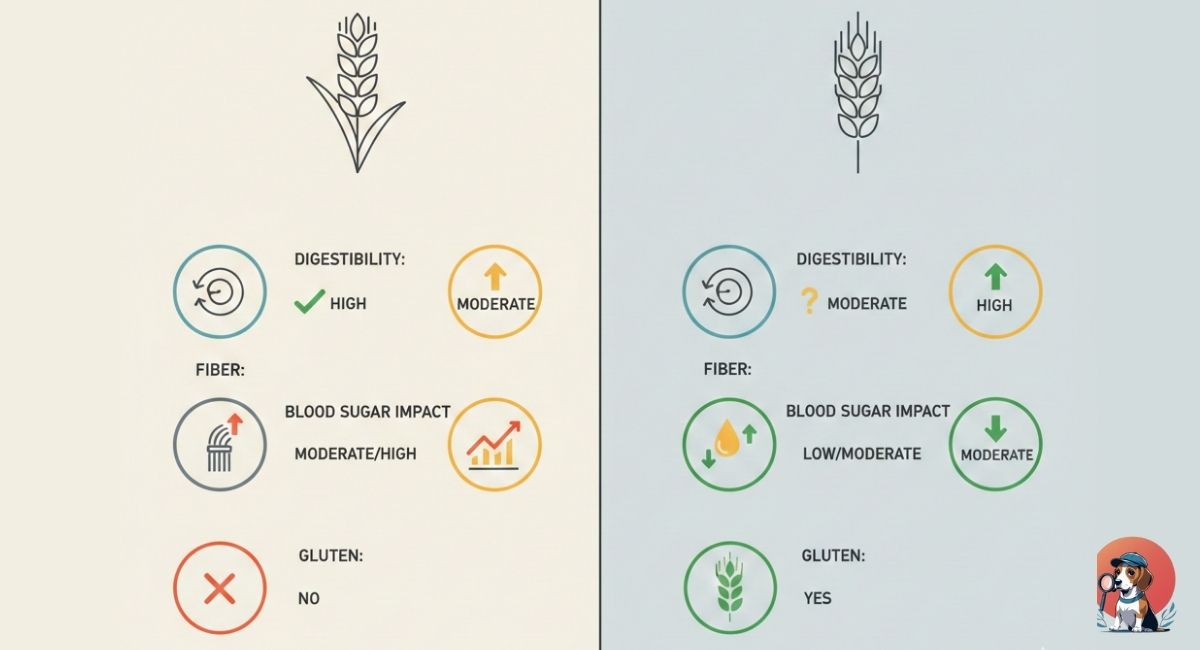
Both rice and barley can be safe, depending on the dog’s needs.
| Feature | Rice | Barley |
|---|---|---|
| Digestibility | Very easy | Moderate |
| Fiber content | Low | High |
| Blood sugar impact | Higher | Lower |
| Best for | Upset stomach | Weight control, diabetes |
| Gluten presence | Naturally gluten-free | Contains gluten |
Rice is often better for short-term digestive upset, while barley may be more suitable for long-term dietary balance.
Before Sharing With Your Pooch
Before feeding barley:
-
Confirm your dog tolerates grains
-
Avoid barley grass completely
-
Use barley as a supplement, not a main food
This guidance aligns with common veterinary feeding recommendations used in everyday clinical practice for healthy adult dogs.
See Also:
FAQS
Q1: Can dogs have barley safely?
Yes, dogs can safely consume barley when it is fully cooked, plain, and fed in small amounts. It should be used as a supplement to regular dog food, not a main meal.
Q2: Is barley grass safe for dogs?
No, barley grass is not safe for dogs because its sharp awns can cause injuries to the mouth, nose, skin, or paws. Dogs should be kept away from barley grass entirely.
Q3: How much barley can I give my dog?
Dogs should only have small portions of barley, such as a spoonful mixed into their regular food. Barley should comprise a small portion of the overall diet.
Q4: Is barley easy for dogs to digest?
Barley is moderately digestible and is usually well-tolerated when cooked thoroughly. Introducing it slowly helps reduce the risk of gas or loose stools.
Q5: Can diabetic dogs eat barley?
Yes, some diabetic dogs can eat barley because it releases energy more slowly than refined grains. It should only be fed under veterinary guidance.
Q6: Can puppies or senior dogs have barley?
Yes, puppies and senior dogs can have barley in small amounts if it is well-cooked and introduced carefully. Extra caution is needed due to their sensitive digestion.
Q7: Is rice or barley better for dogs?
Neither is universally better, as rice is easier to digest while barley provides more fiber. The better choice depends on your dog’s health and dietary needs.
Q8: When should I avoid feeding barley to my dog?
Barley should be avoided if your dog has a grain intolerance, gluten sensitivity, or shows digestive upset after eating it. Barley grass should always be avoided.
Conclusion
Dogs can have cooked barley safely when it is plain, well-prepared, and fed in small amounts. Barley grass is dangerous and should always be avoided due to injury risk. If you want to add barley, start with a small portion, watch how your dog responds, and consult your veterinarian if your dog has any health conditions or dietary sensitivities.