
No, dogs should not eat mango skin. While the skin is not technically toxic like grapes, it is extremely tough to digest and poses a significant choking hazard or intestinal blockage risk. Additionally, mango skin contains urushiol, a compound found in poison ivy that can cause allergic skin reactions in sensitive dogs.
Can Dogs Have Mango Skin?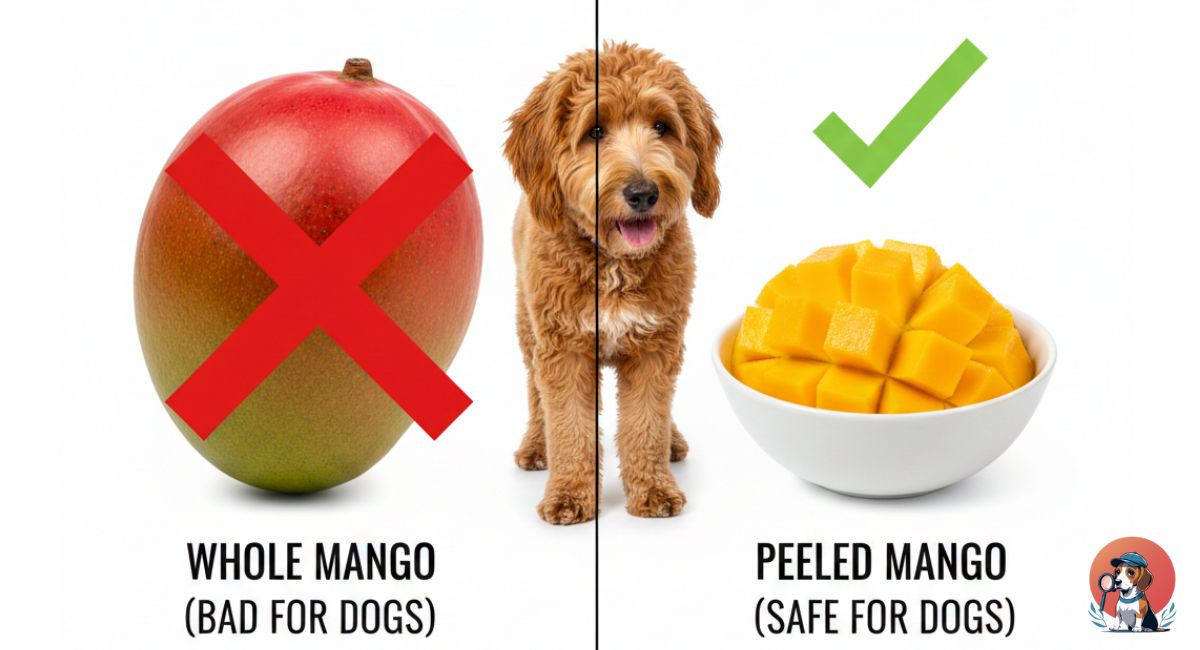
While humans sometimes eat mango skin for its fiber and polyphenols, the same logic does not apply to our canine companions. A dog’s digestive system is biologically optimized for proteins and simple fats, not the heavy cellulose found in thick fruit peels. Even if a tiny piece might not harm some large breeds, it is generally considered unsafe to offer it as a deliberate treat.
The primary issue is the physical structure. Mango skin is thick, leathery, and highly fibrous. Dogs typically “gulp” their snacks rather than chewing them into a mash. This makes these tough skins a liability in both the throat (esophagus) and the gastrointestinal tract.
Can Dogs Eat Mango Skin?
Technically, if your dog accidentally swallows a small scrap that fell on the floor, it is unlikely to be fatal. However, you should never intentionally feed it to them. The risks—ranging from mild stomach upset to emergency surgery for internal obstructions—far outweigh any negligible nutritional benefits.
In 2026, veterinary experts emphasize “preventative nutrition.” This means removing all physical barriers to digestion. Always peel the mango entirely before sharing the soft, golden flesh with your pet. This ensures they receive the Vitamin A and Vitamin C without the unnecessary physical risks.
Is Mango Skin Safe or Toxic for Dogs?
Mango skin is not classified as “toxic” in the same category as chocolate or macadamia nuts. However, it contains urushiol. This is a natural oily resin found in plants of the Anacardiaceae family.
For sensitive dogs, contact with or ingestion of urushiol can lead to:
-
Contact Dermatitis: Red, itchy skin or rashes on the belly or paws.
-
Stomatitis: Swelling or irritation around the mouth and gums.
-
GI Distress: Severe inflammation of the stomach lining if ingested in large quantities.
Because you cannot predict if your dog has a pre-existing urushiol sensitivity, avoiding the skin is the only 100% safe practice.
Why Mango Skin Is Hard for Dogs to Digest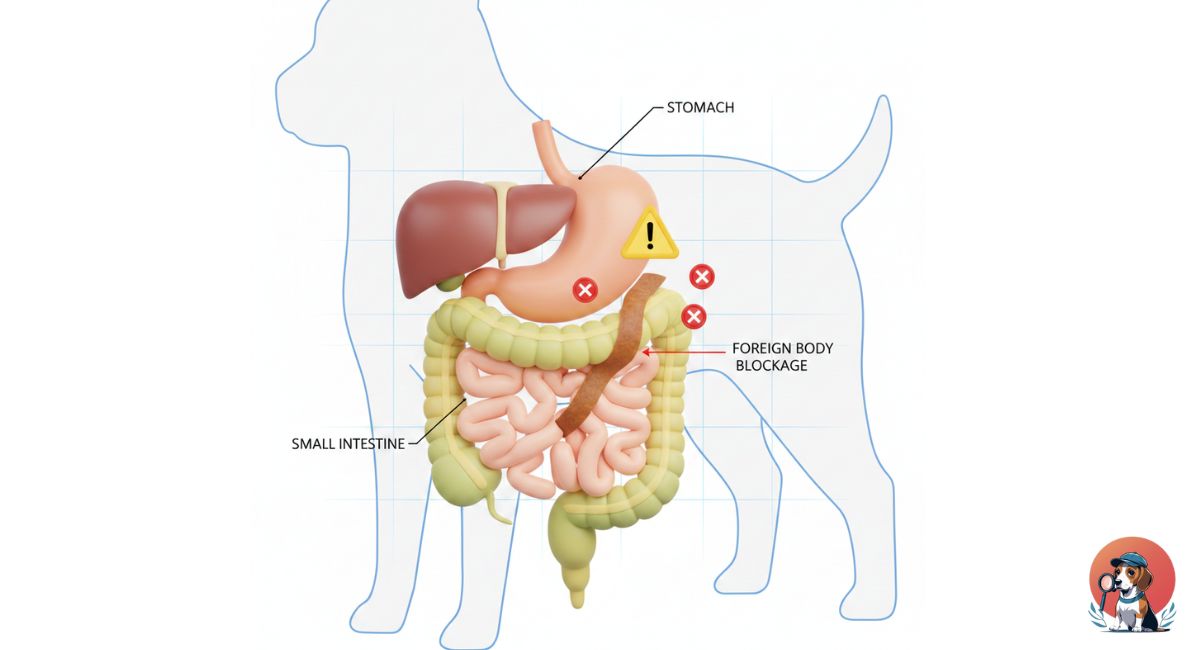
Dogs have a significantly shorter digestive tract than humans. Their bodies lack the specific enzymes required to break down complex plant fibers quickly.
Mango skin is loaded with complex cellulose, which does not break down easily in a dog’s stomach acid. Instead of being processed, the skin often sits in the stomach or moves into the small intestine fully intact. This creates a “traffic jam” effect, where the skin acts as a plug, preventing other food and gas from passing through.
Risks of Feeding Mango Skin to Dogs
1. Choking Hazard
The rubbery, “non-slip” texture of mango skin makes it difficult to slide down the esophagus. If a dog tries to swallow a large strip, it can easily become lodged. This is a critical danger for Brachycephalic breeds (like Pugs or Bulldogs), who already struggle with restricted airways.
2. Digestive Upset (Vomiting or Diarrhea)
The canine immune system often views the tough skin as a foreign object. To protect itself, the dog’s system may trigger an “expulsion response.” This leads to acute bouts of vomiting or “osmotic diarrhea” as the body tries to flush the indigestible material out.
3. Intestinal Blockage Risk (The “Silent Killer”)
This is the most serious medical risk. If the skin passes the stomach but gets stuck in the narrow bends of the small intestine, it creates a foreign body obstruction. This is a life-threatening emergency.
Note: If your dog stops eating or pooping after consuming mango skin, see a vet immediately.
4. Pesticide Exposure
Most mangos are imported and treated with fungicides or wax to survive shipping. These chemicals are designed to adhere to the skin. Even with washing, trace amounts can remain, potentially leading to chemical irritation in a dog’s sensitive gut.
Nutritional Value of Mango Skin for Dogs (Comparison Table)
| Nutrient | Benefit | Risk Level in Skin | Recommended Source |
| Fiber | Regularity | High Risk (Too tough) | Cooked pumpkin / Mango flesh |
| Vitamin A | Eye health | Low | Mango flesh / Carrots |
| Antioxidants | Cell protection | Moderate | Blueberries / Mango flesh |
| Vitamin C | Immune support | Low (Dogs make their own) | Raspberries |
Conclusion: The “cost” of accessing these nutrients via the skin is too high. The soft mango flesh provides these same benefits with zero mechanical risk.
Can Puppies Have Mango Skin?
Absolutely not. Puppies are in a critical developmental stage. Their esophagi are narrow, and their “learning” immune systems are highly reactive. A single strip of mango skin could easily cause a total blockage in a 10-week-old puppy. If you want to introduce a puppy to fruit, stick to a tiny, mashed-up piece of ripe mango flesh.
Are Some Dogs More Sensitive to Mango Skin?
Yes. Vulnerability is not equal across all breeds.
-
Small Breeds: Yorkies and Chihuahuas have tiny internal diameters; even a 1-inch piece of skin is dangerous.
-
Dogs with GI Issues: If your dog has a history of Pancreatitis or IBD, the fiber in the skin will cause immediate inflammation.
-
Senior Dogs: Older dogs have slower “gut motility,” meaning the skin stays in their system longer, increasing the chance of rot or blockage.
Signs Your Dog Is Not Tolerating Mango Skin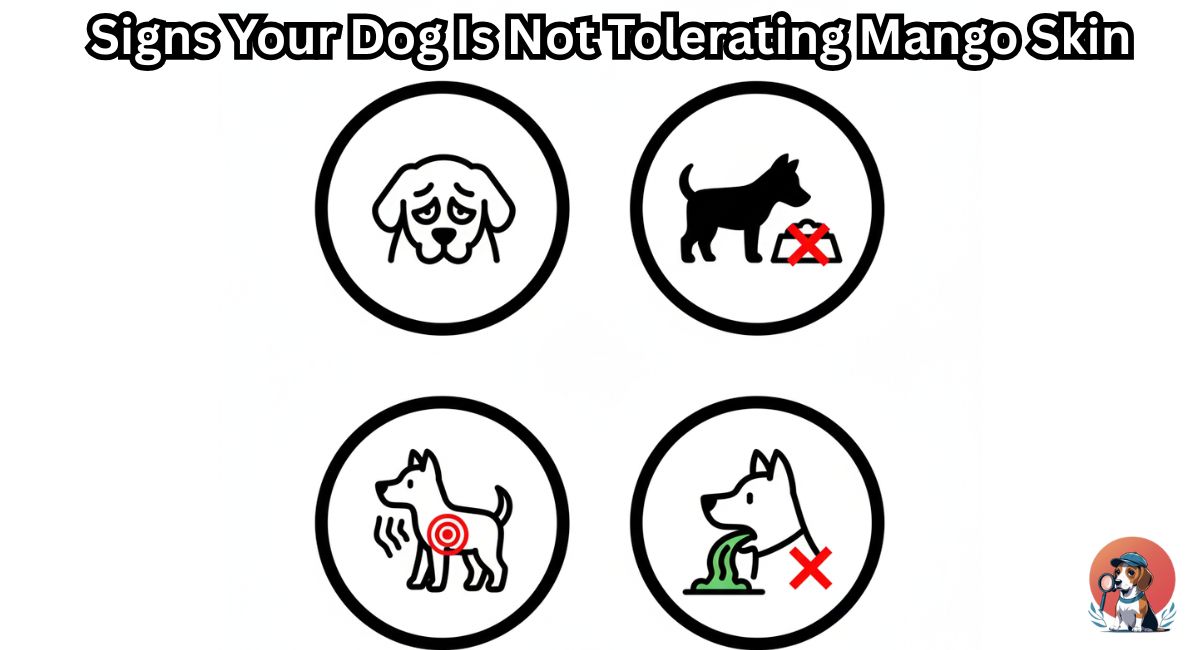
Watch for these “red flag” symptoms within 24–48 hours of ingestion:
-
Lethargy: Acting unusually tired or hiding in corners.
-
Repeated Vomiting: Inability to keep even water down.
-
Abdominal Pain: Whining when picked up or standing in a “prayer position” (front legs down, rear end up).
-
Changes in Stool: Straining to defecate or sudden liquid diarrhea.
What to Do If Your Dog Eats Mango Skin
If your dog sneaks a piece from the compost bin:
-
Step 1: Identify the amount. Was it a scrap or the whole peel?
-
Step 2: Do NOT induce vomiting. Mango skin is leathery and can cause choking if it comes back up.
-
Step 3: Feed a “Bulky” meal. A small amount of plain white rice or canned pumpkin can help “cushion” the skin as it moves through the gut.
-
Step 4: Monitor. Check every stool for the next 48 hours to ensure the skin has passed.
How to Safely Feed Mango to Dogs (Without the Skin)
-
Wash: Remove surface contaminants.
-
Peel: Remove 100% of the skin.
-
De-pit: The mango pit contains cyanogenic glycosides (similar to apple seeds) and is a massive choking hazard.
-
Slice: Cut into small, 1-inch cubes.
-
Freeze: In 2026, frozen mango cubes are a top-rated “low-calorie” summer treat for dogs.

How Much Mango Flesh Can Dogs Eat Instead?
Mango is high in natural sugars (fructose). Overfeeding can lead to obesity or dental issues.
-
Extra Small Dogs (<10 lbs): 1 cube, once a week.
-
Medium Dogs (30–50 lbs): 2–3 cubes, twice a week.
-
Large Dogs (>70 lbs): A small handful (approx. 5 cubes).
When to Call a Veterinarian
Seek emergency veterinary care if:
-
Your dog ate the mango pit.
-
There is persistent vomiting for more than 6 hours.
-
The abdomen feels hard or bloated to the touch.
-
Your dog is pacing and unable to get comfortable.
See Also:
FAQs
Q:1 Can mango skin cause diarrhea in dogs?
Yes. The high fiber and potential urushiol content often irritate the lining of the colon, leading to loose stools.
Q:2 Is dried mango skin safer?
No. Drying actually makes the skin tougher and more concentrated in sugar and chemicals. It is even harder for a dog to digest than fresh skin.
Q:3 My dog ate a tiny piece of skin. Should I worry?
A small scrap (the size of a postage stamp) will likely pass through a healthy adult dog. Just monitor their energy levels and appetite for 24 hours.
Conclusion: Can Dogs Have Mango Skin?
In the world of 2026 pet nutrition, the verdict is clear: Keep the flesh, ditch the skin. While mango is a vitamin-rich “superfood” for dogs when prepared correctly, the skin is a hazardous byproduct. To keep your dog’s tail wagging, always peel, pit, and slice.