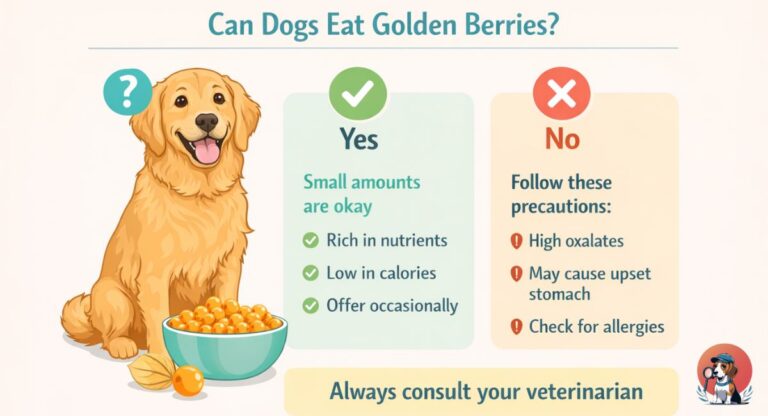
Yes, most dogs with pancreatitis can eat bananas in moderation. Bananas are naturally low in fat, which is the most important factor for a pancreatitis-friendly diet. However, because they are high in sugar and fiber, they should only be given as an occasional treat and never during an active flare-up.
What Is Pancreatitis in Dogs?
Pancreatitis is the inflammation of the pancreas, an organ responsible for producing digestive enzymes (like Lipase and Amylase) and insulin. In a healthy dog, these enzymes remain inactive until they reach the small intestine. In a dog with pancreatitis, these enzymes activate prematurely inside the pancreas itself.
This causes “autodigestion,” where the organ begins to break down its own tissue. This leads to post-prandial inflammation (pain after eating) and a spike in serum lipase levels. Because the pancreas is so sensitive to dietary fat, managing every gram of lipid intake is the most critical part of long-term recovery.
Acute vs. Chronic Pancreatitis: Does It Affect Diet Choices?
The type of pancreatitis your dog has will dictate how strict their diet must be.
-
Acute Pancreatitis: This is a sudden, severe attack. During this phase, the pancreas needs total rest (fasting). Often, no treats—including bananas—should be given until the dog is stabilized and their Amylase levels have normalized.
-
Chronic Pancreatitis: This is a long-term, smoldering inflammation. Dogs with chronic pancreatitis usually live on a strict low-fat maintenance diet. For these dogs, a small piece of banana can often be a safe, low-fat alternative to commercial fatty treats.
Symptoms of Pancreatitis in Dogs
Recognizing a flare-up is essential before offering any treats. If your dog shows these signs, withhold all food:
-
Hunched back: A sign of intense abdominal pain.
-
Persistent vomiting: Often yellow bile or undigested food.
-
Greasy Diarrhea: Known as steatorrhea, indicating fat isn’t being digested.
-
Loss of appetite: Refusing even high-value treats.
-
Lethargy: Extreme weakness or “dullness” in their eyes.
What Can Dogs With Pancreatitis Safely Eat?
The golden rule for pancreatitis is low-fat. Most vets recommend a diet where fat makes up less than 10% of the “dry matter.” Safe foods typically include:
-
Boiled chicken breast (no skin, no bones)
-
Plain white rice or boiled potatoes
-
Low-fat cottage cheese (under 2% fat)
-
Specific prescription “Gastrointestinal Low Fat” kibble
-
Safe fruits like blueberries and small amounts of bananas
Are Bananas Safe for Dogs With Pancreatitis?
Bananas are considered safe because they contain negligible amounts of fat. Since fat is the primary trigger for pancreatic enzyme secretion, bananas do not pose the same “immediate” danger as a piece of bacon or cheese.
However, “safe” does not mean “unlimited.” The high sugar content in bananas can lead to weight gain or digestive upset if overfed, and obesity is a major risk factor for future attacks.
Nutritional Breakdown of Bananas for Pancreatitis Dogs
| Nutrient | Amount (per 100g) | Benefit for Dogs | Impact on Pancreatitis |
| Fat | 0.3g | Extremely Low | Excellent; won’t trigger lipase spikes. |
| Calories | 89 kcal | Energy source | Moderate; must be counted in daily totals. |
| Sugar | 12g | Quick energy | Caution: too much can stress insulin production. |
| Potassium | 358mg | Heart & Kidney health | Excellent; replenishes lost electrolytes. |
| Fiber | 2.6g | Helps digestion | Good; helps with stool consistency. |
Fat Content
With only 0.3 grams of fat per 100g, bananas are a “low-lipid” food. This prevents the pancreas from having to work overtime to produce fat-breaking enzymes.
Sugar Content and Caloric Load
A medium banana contains approximately 105 calories. For a 20lb dog on a restricted 500-calorie-per-day diet, one whole banana would take up 20% of their daily allowance. This is too much. Treats should stay under 10% of total calories (50 calories for that 20lb dog).
Fiber and Digestibility
Bananas provide soluble fiber (pectin). This can help firm up stools in dogs with mild digestive issues. However, if a dog’s digestive tract is already inflamed, too much fiber might cause gas or bloating.
Vitamins and Potassium
Bananas are rich in Vitamin B6 and Potassium. These support the immune system and help maintain healthy blood pressure, which is beneficial for dogs recovering from chronic illness.
Are Bananas Too High in Sugar for Pancreatitis?
For a healthy dog, the sugar in a banana is fine. However, many dogs with chronic pancreatitis develop secondary Diabetes Mellitus because the pancreas becomes too scarred to produce enough insulin. If your dog is both diabetic and has pancreatitis, even the natural sugars in a banana may cause dangerous blood glucose spikes.
When Should You Avoid Giving Bananas?
During a Pancreatitis Flare-Up
If your dog is currently vomiting or showing signs of pain, do not give them anything. Even low-fat treats can trigger cholecystokinin (CCK), a hormone that tells the pancreas to work.
Dogs With Diabetes
As mentioned, the high glycemic index of ripe bananas can cause blood sugar spikes. Stick to lower-sugar treats like cucumbers if your dog is diabetic.
Dogs on Strict Prescription Low-Fat Diets
If your vet is doing a “dietary trial” to see if your dog’s lipase levels drop, do not add bananas. You want to keep the variables as low as possible.
How Much Banana Can a Dog With Pancreatitis Eat?
To keep your dog’s pancreas happy, follow these portion limits based on a standard 10% treat rule:
-
Extra Small Dogs (under 10 lbs): 1 thin slice (approx. 5–10 calories).
-
Small Dogs (10–25 lbs): 2–3 slices (approx. 20–30 calories).
-
Medium Dogs (25–50 lbs): 1/4 of a banana (approx. 25–35 calories).
-
Large Dogs (over 50 lbs): 1/2 of a small banana (approx. 50 calories).
How to Safely Feed Bananas to a Dog With Pancreatitis
Start With a Small Portion
Introduce the fruit slowly. Give one small piece and wait 24 hours to ensure it doesn’t cause gastrointestinal upset or “stomach gurgling.”
Mash and Mix With Low-Fat Food
Mashing the banana makes it easier to digest. You can mix a small amount into their prescription low-fat kibble to make the meal more appealing for picky eaters.
Monitor for Digestive Upset
Watch for “stomach gurgling,” excessive gas, or loose stools. If these occur, the fiber or sugar content may be too high for your dog’s specific sensitivity.
Signs Bananas May Not Agree With Your Dog
-
Increased Flatulence: Smelly gas is a sign of fermentation in the gut.
-
Soft Stools: Too much sugar or fiber can pull water into the colon.
-
Licking Lips: This is often a sign of nausea in dogs.
Best Low-Fat Fruit Alternatives for Dogs With Pancreatitis
If your dog doesn’t like bananas, try these “pancreas-safe” options:
-
Blueberries: Very low-calorie and packed with antioxidants.
-
Watermelon: Mostly water, very hydrating (remove seeds and rind).
-
Apples: Good fiber source (remove all seeds and the core).
-
Strawberries: Low fat, but give in small amounts due to sugar
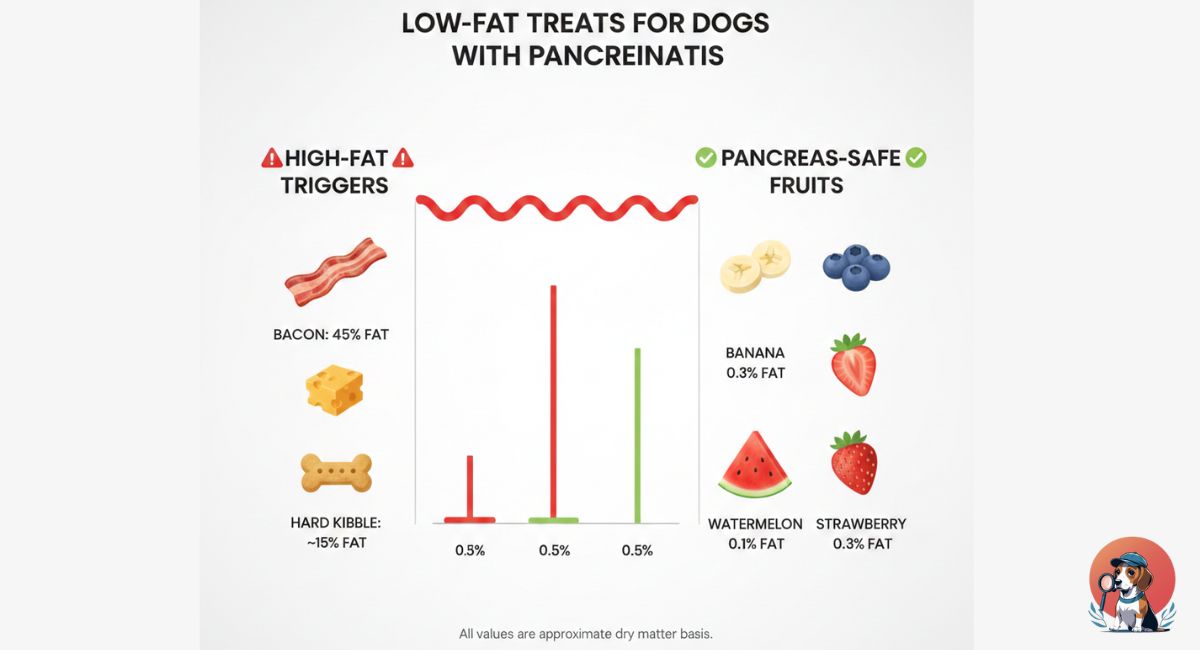
Caption: “Most veterinary experts recommend keeping treats under 10% fat content for dogs with chronic pancreatitis. As shown, bananas and blueberries are excellent low-fat alternatives.”
Foods You Should Never Feed a Dog With Pancreatitis
Avoid these high-fat “triggers” at all costs:
-
Bacon and Sausage: High fat and high sodium.
-
Cheese and Butter: High lipid content that triggers enzyme release.
-
Poultry Skin: Where most of the bird’s fat is stored.
-
Fried Foods: The most common cause of acute “holiday” pancreatitis.
Vet-Recommended Diet Guidelines for Pancreatitis Dogs
Ideal Fat Percentage
Look for food that is under 10% fat on a dry matter basis. For severe chronic cases, vets often prefer under 7% fat.
Prescription Diet Options
Brands like Hill’s Prescription Diet i/d Low Fat and Royal Canin Gastrointestinal Low Fat are the gold standard because they are formulated to be highly digestible.
Home-Cooked Low-Fat Diets
If you cook at home, use lean proteins like boiled turkey mince or white fish. Note: Always consult a veterinary nutritionist to ensure home-cooked meals aren’t missing vital minerals like Calcium.
See Also:
FAQs
Q.1 Can a dog with pancreatitis eat bananas every day?
Yes, as long as it fits within their daily calorie limit and they are in a stable, non-flare-up phase.
Q.2 Can a diabetic dog with pancreatitis eat bananas?
Usually, no. The sugar content is high enough to interfere with insulin regulation. Stick to green beans or cucumber.
Q.3 Are frozen bananas safe?
Yes. Frozen banana slices can be a soothing, slow-to-eat treat. Just ensure they are cut into bite-sized pieces to prevent choking.
Q.4 Can puppies with pancreatitis eat bananas?
Puppies have very specific nutritional needs. While a tiny piece of banana won’t hurt, always prioritize their specialized growth formula.
Q.5 Can bananas help with diarrhea?
The pectin can help, but if the diarrhea is caused by pancreatic insufficiency, bananas won’t fix the underlying issue.
Final Verdict: Should You Feed Bananas to a Dog With Pancreatitis?
Bananas are a safe, low-fat treat for dogs with stable or chronic pancreatitis. Their lack of fat makes them a much better choice than traditional dog biscuits.
However, they are not a “cure.” Always feed them in small amounts, avoid them during acute flare-ups, and monitor your dog for any signs of sensitivity. When in doubt, the safest treat for a pancreatitis dog is a piece of their own prescription low-fat kibble.