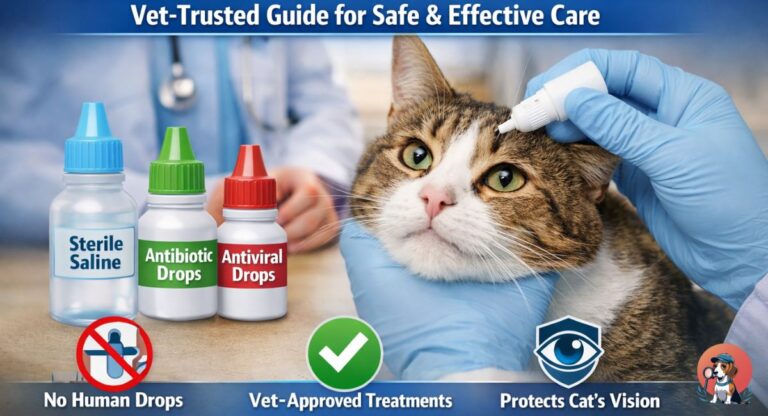
Yes, plain saline solution is safe for cats when used correctly. It is commonly used to clean cat eyes, remove dirt, flush out debris, and gently rinse minor wounds. Saline must be sterile, non-medicated, and preservative-free. It does not treat infections, so painful, severe, or ongoing symptoms should always be checked by a veterinarian.
Can You Use Saline Solution on Cats?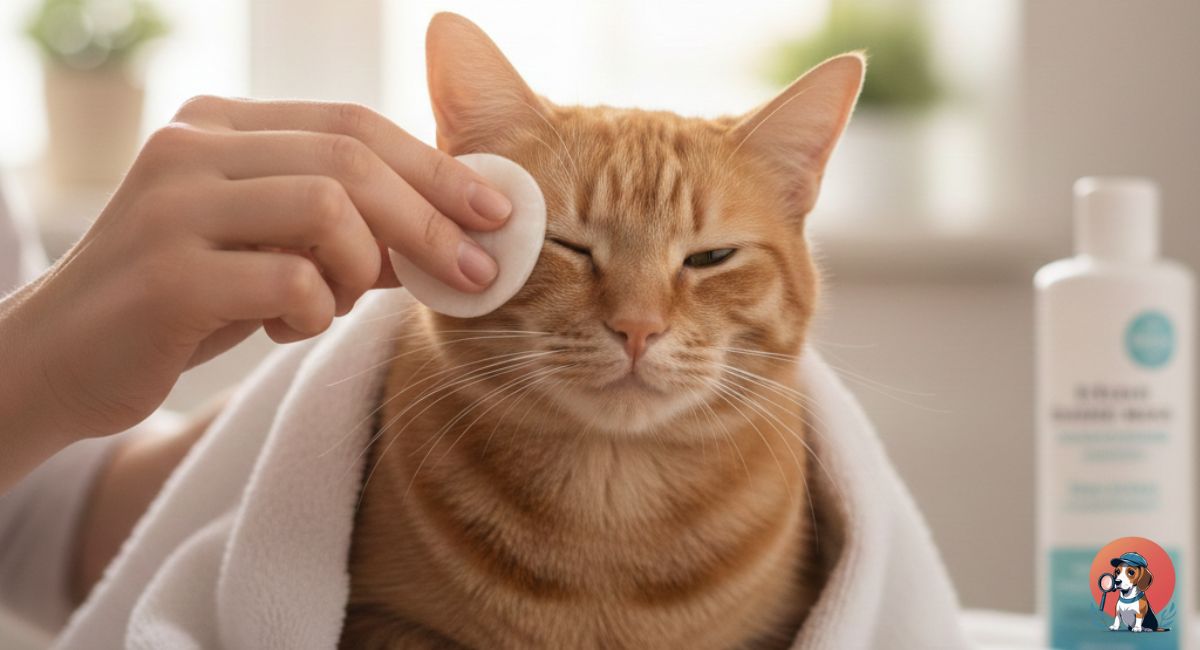
Many cat owners notice watery eyes, tear stains, or mild discharge and want a safe home solution. Saline solution is often recommended because it closely matches the natural fluids found in a cat’s body.
Veterinarians regularly use saline as a first-step cleaning solution, not as medicine. It helps remove dust, debris, and irritants without damaging sensitive eye tissue.
Because of this, saline is frequently discussed under eye drops safe for cats, especially for routine eye hygiene and early care.
Why Cat Eyes Are So Sensitive to Products
Cats have very delicate eyes compared to humans and dogs. The surface of the eye, called the cornea, is thin and reacts quickly to chemicals.
Even mild additives in eye products can cause burning, redness, or excessive tearing. Cats also hide discomfort well, which increases risk.
This sensitivity is one reason veterinarians prefer plain saline solution as the safest first option for eye cleaning.
What Is a Saline Solution and Why Is It Used for Cats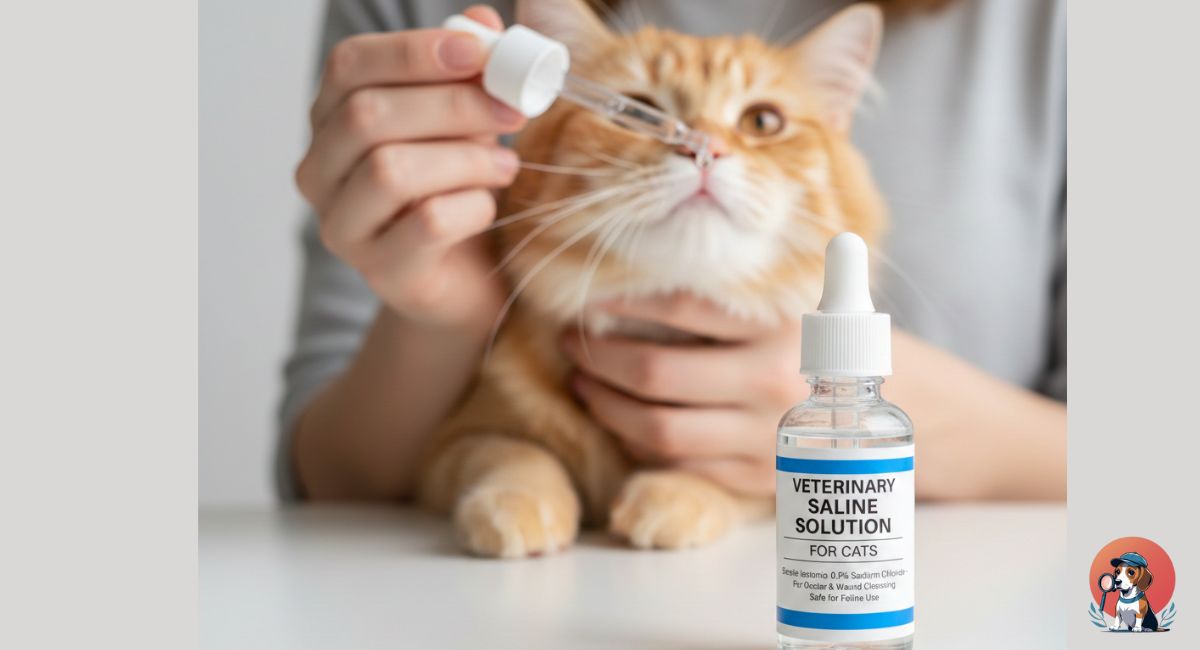
Saline solution is a mixture of sterile water and sodium chloride (salt). Plain saline contains no antibiotics, painkillers, or active drugs.
Its simple formula makes it gentle and widely tolerated.
Why veterinarians use saline for cats:
-
Matches the body’s natural salt balance
-
Does not sting healthy eyes or skin
-
Flushes out dust, pollen, and discharge
-
Safe for short-term external use
Vet experience: In veterinary clinics, saline is routinely used to clean a cat’s eyes before exams or before applying prescription eye drops. It prepares the eye without interfering with treatment.
Is Saline Solution Safe for Cats?
Yes, plain saline solution is safe for most cats when used correctly and for the right purpose.
Cats have sensitive eyes and skin. Saline works because it does not disturb natural tissues or moisture balance.
Benefits of saline for cats:
-
Gentle on sensitive eyes
-
Safe for kittens and adult cats
-
Reduces surface irritation
-
Helps remove allergens and debris
-
Supports natural eye cleaning
Important safety notes:
-
Use only sterile, non-medicated saline
-
Do not use if the eye looks cloudy or injured
-
Stop use if redness or swelling increases
Saline supports cleanliness but does not cure infections or disease.
Can Human Saline Solution Be Used for Cats?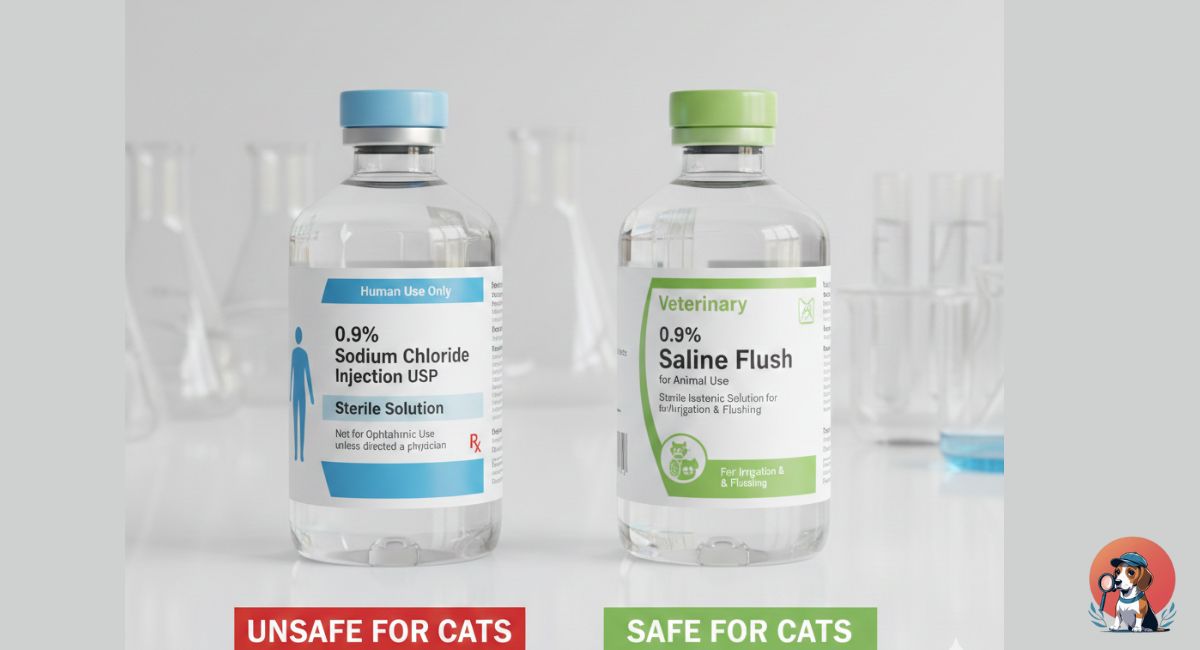
Human saline solution can be used for cats, but only certain types are safe.
Some human products contain additives that are harmless to people but irritating to cats.
Safe human saline options:
-
Sterile saline labeled for eye or wound irrigation
-
No preservatives or buffering agents
-
No redness-relief ingredients
Avoid these products:
-
Contact lens solutions with cleaning chemicals
-
Medicated eye drops
-
Saline mixed with antibiotics or pain relievers
Always read the label carefully before using any human product on a cat.
Saline Solution vs Homemade Salt Water
Some owners consider making saline at home using salt and water. This is not recommended for eye care.
Homemade salt water often has:
-
Incorrect salt concentration
-
Non-sterile water
-
Risk of bacterial contamination
Even small errors can irritate or damage a cat’s eyes. Pharmacy-grade sterile saline is always safer.
How to Use Saline Solution to Clean Your Cat’s Eyes Safely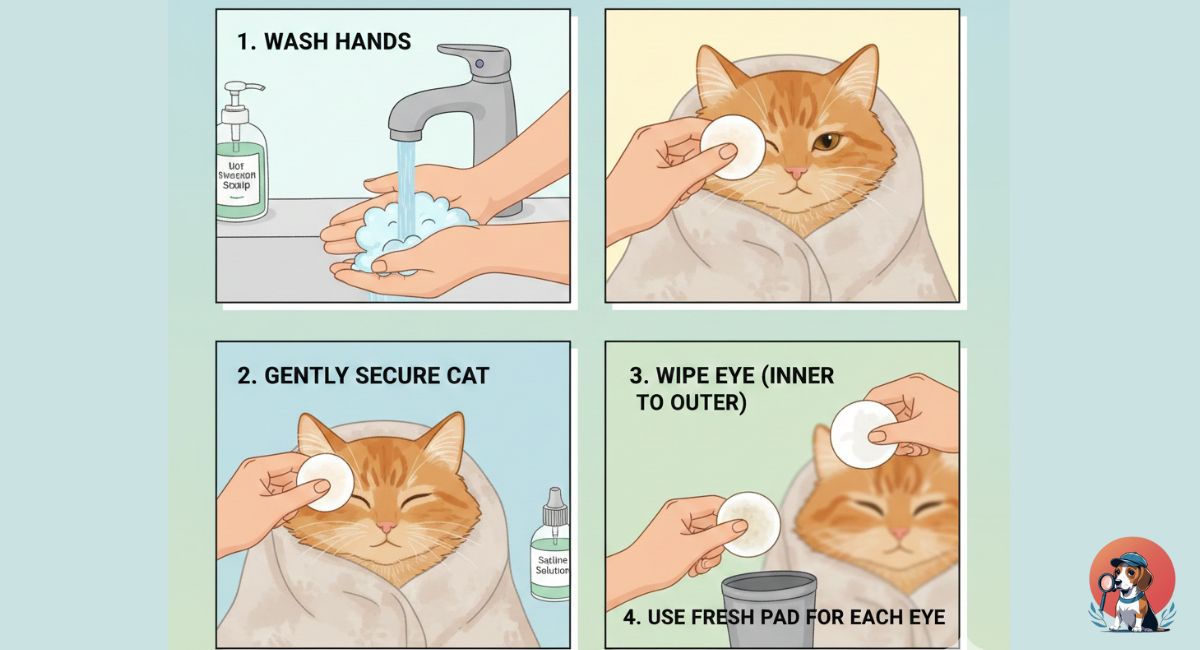
Eye cleaning should be calm and gentle to avoid stress and injury.
What you need:
-
Sterile saline solution
-
Cotton pads or sterile gauze
-
Clean towel
Step-by-step process:
-
Wash your hands thoroughly
-
Gently wrap your cat in a towel if needed
-
Moisten a pad with saline solution
-
Wipe from the inner corner outward
-
Use a fresh pad for each eye
Never rub the eye surface or reuse pads.
Common Mistakes When Using Saline on Cats
Even safe products can cause problems if used incorrectly.
Avoid these mistakes:
-
Using tap water instead of saline
-
Touching the eye with the bottle tip
-
Reusing cotton pads
-
Applying pressure while wiping
-
Using saline many times daily for long periods
If symptoms worsen, stop and consult a veterinarian.
How Often Can You Use Saline Solution on Cats?
Frequency depends on why saline is being used.
| Situation | Safe Frequency |
|---|---|
| Mild eye discharge | 1–2 times daily |
| Dust or allergens | As needed |
| Routine eye cleaning | A few times per week |
| Kittens | Once daily unless advised |
If symptoms last longer than 48 hours, veterinary evaluation is recommended.
Using Saline Solution for Kittens
Kittens often develop watery or crusty eyes due to immature immune systems or environmental irritants.
Saline solution is commonly recommended because it contains no medication and is gentle on developing eyes.
Vet experience: Many veterinarians recommend plain saline first for kittens with mild discharge before prescribing medicated eye drops.
For more options, see kitten eye drops over the counter, which often include saline-based formulas.
Using Saline for Tear Stains in Cats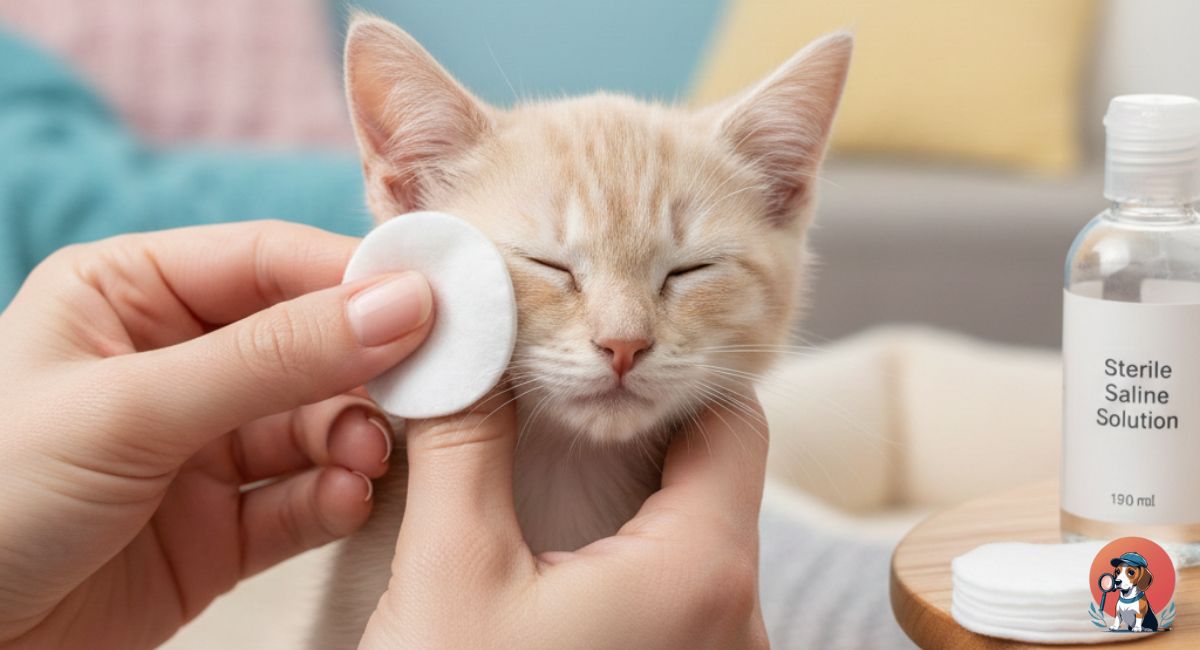
Some cats develop tear stains due to facial structure, allergies, or blocked tear ducts.
Saline helps by gently removing dried tears and preventing buildup around the eyes.
It does not remove stains permanently, but it:
-
Keeps the area clean
-
Reduces odor and crusting
-
Prevents skin irritation
Flat-faced breeds often benefit from daily gentle saline wiping.
Can Saline Solution Be Used on Minor Wounds?
Yes, saline solution is safe for cleaning minor surface wounds on cats.
It helps remove dirt and loose debris without damaging healing tissue.
Suitable uses:
-
Small scratches
-
Minor cuts
-
Superficial abrasions
Saline keeps the wound clean but does not disinfect deeply.
Wound Safety Guide: When Saline Is Enough and When It Is Not
| Wound Type | Saline Safe to Use | Vet Visit Needed |
|---|---|---|
| Small scratch | Yes | No |
| Shallow cut | Yes | Sometimes |
| Deep puncture | No | Yes |
| Bite wound | No | Yes |
| Bleeding wound | Temporary only | Yes |
Saline is supportive care, not full treatment.
When Saline Is Not Enough for Wounds
Saline does not kill bacteria or viruses.
Seek veterinary care if you notice:
-
Swelling, heat, or pus
-
Bleeding that does not stop
-
Limping or signs of pain
-
Worsening redness or odor
These signs often require antibiotics or professional wound care.
Signs That Indicate You Should NOT Use Saline and See a Vet
Saline should never delay medical care.
Contact a veterinarian if your cat shows:
-
Thick yellow or green eye discharge
-
Squinting or eye pain
-
Swollen eyelids
-
Cloudy or damaged eyes
-
Fever or lethargy
These symptoms often indicate infection or injury.
Saline vs Medicated Eye Drops for Cats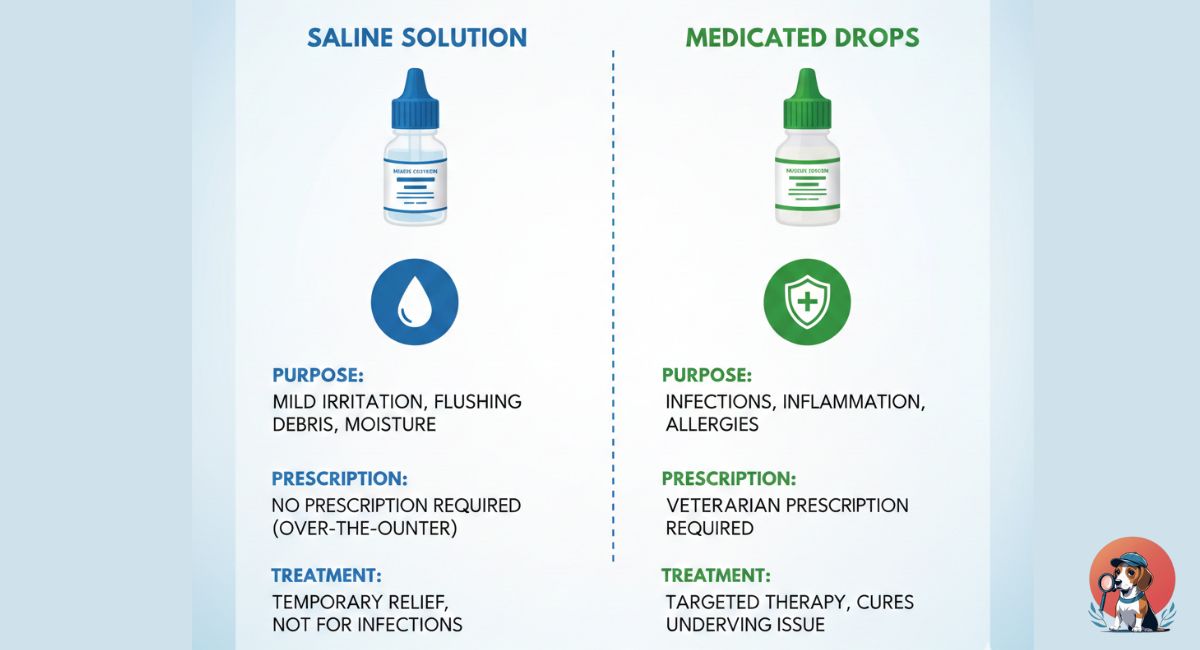
Saline is often confused with treatment eye drops.
| Feature | Saline Solution | Medicated Eye Drops |
|---|---|---|
| Purpose | Cleaning | Treating disease |
| Contains medication | No | Yes |
| Prescription required | No | Often yes |
| Treats infection | No | Yes |
Saline prepares and cleans the eye but does not cure illness.
Important Notes on Antibiotic Eye Products
Is Neosporin safe for cats?
Neosporin is not recommended for cat eyes without veterinary approval. Some cats may experience allergic reactions or worsening irritation.
Neomycin and polymyxin B sulfates for cats
These antibiotics may be prescribed by veterinarians for bacterial infections. They should never be used without a diagnosis.
Improper antibiotic use can delay healing and contribute to resistance.
Antiviral Eye Drops for Cats
Saline cannot treat viral eye infections.
Antiviral eye drops for cats are prescription medications commonly used for conditions such as feline herpesvirus.
Saline may be used alongside antiviral treatment to gently clean discharge, but it cannot replace medication.
FAQs
Q.1 Can cats heal minor wounds on their own?
Yes. Healthy cats can heal small scratches naturally. Saline helps keep the area clean during healing.
Q.2 Can saline solution prevent infections?
No. Saline cleans the surface but does not kill bacteria or viruses.
Q.3 Can kittens use saline solution safely?
Yes. Plain sterile saline is safe for kittens when used gently.
Q.4 Is saline better than kitten eye drops over the counter?
Saline is often the base ingredient. Some OTC kitten eye drops include saline plus mild soothing agents.
Q.5 Can saline replace antiviral or antibiotic eye drops for cats?
No. Saline cannot replace antiviral eye drops for cats or antibiotics when infection is present.
Expert Takeaway
Saline solution is a safe, gentle, and vet-trusted option for cleaning cat eyes and minor wounds. Its strength lies in its simplicity.
Veterinarians rely on saline because it supports hygiene without masking symptoms or causing harm.
Used correctly, saline helps manage minor issues while allowing owners to recognize when professional care is needed.
For persistent symptoms, prescription eye drops or a veterinary diagnosis are always the safest next step.