Eye drops safe for cats include sterile saline solutions, vet-approved antibiotic drops, and antiviral eye drops for cats. Do not use human eye drops unless a veterinarian approves them. Using the correct eye drops helps reduce irritation, control infection, and protect your cat’s vision safely.
Always follow your vet’s instructions exactly.
What Are Cat Eye Drops?
Cat eye drops are liquid solutions made specifically for feline eyes.
They are designed to clean, soothe, or treat eye conditions without harming sensitive eye tissues.
Common types include:
-
Sterile saline solutions
-
Antibiotic eye drops
-
Neomycin and polymyxin B sulfates for cats (prescription only)
-
Antiviral eye drops
-
Anti-inflammatory or allergy-support drops
Cat eyes are more sensitive than human eyes, so the correct formulation matters.
How Do I Know If My Cat Needs Eye Drops?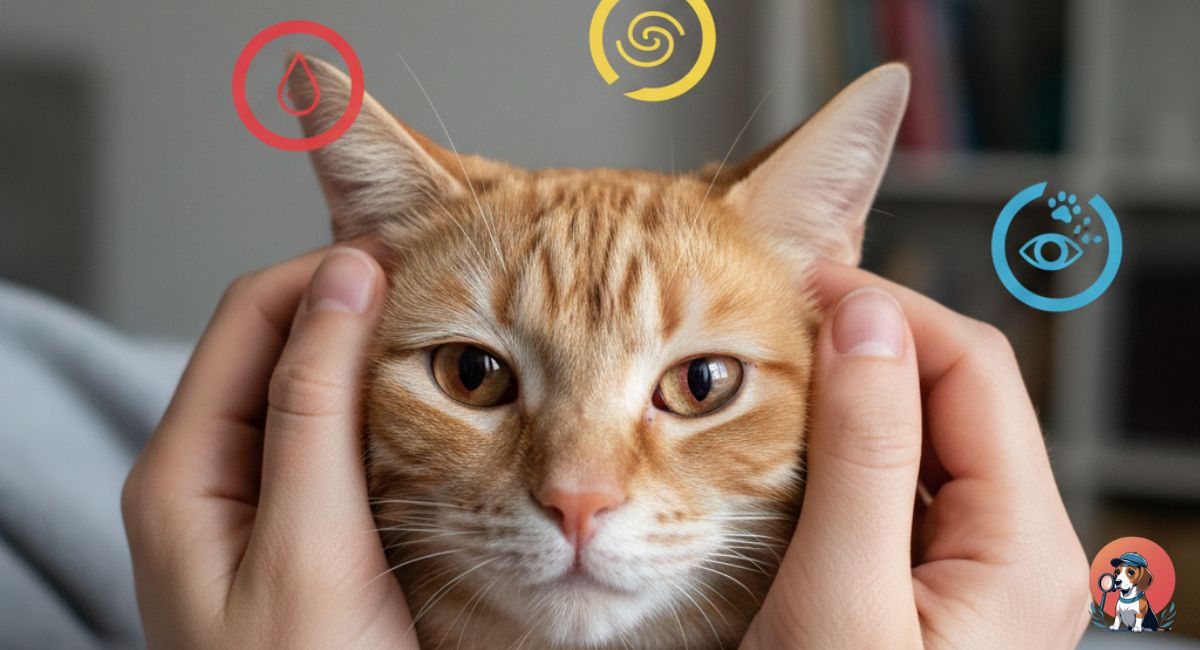
Cats often show clear signs when something is wrong with their eyes.
Watch for:
-
Redness or swelling
-
Yellow, green, or sticky discharge
-
Excessive tearing
-
Squinting or blinking often
-
Rubbing the face with paws
If symptoms last more than 24 hours, do not wait—eye drops or veterinary care may be needed.
Why Would My Cat Need Eye Drops?
Eye drops help treat discomfort and prevent vision damage.
They are commonly used to:
-
Treat bacterial infections
-
Manage viral eye disease
-
Soothe allergy-related irritation
-
Flush dust, pollen, or debris
-
Reduce inflammation after a minor injury
Do not exceed the recommended number of drops.
What Are the Most Common Causes of Eye Irritation in Cats?
Eye irritation can develop for many reasons.
Common causes include:
-
Bacterial infections
-
Viral infections (such as feline herpesvirus)
-
Allergies
-
Dust, hair, or foreign objects
-
Blocked tear ducts
-
Scratches to the eye surface
What Is Allergic Conjunctivitis?
Allergic conjunctivitis is inflammation caused by allergens like pollen or dust.
Signs include:
-
Red eyes
-
Clear, watery discharge
-
Itching and frequent blinking
Allergy-related irritation often affects both eyes.
Using the Right Eye Drops for Cats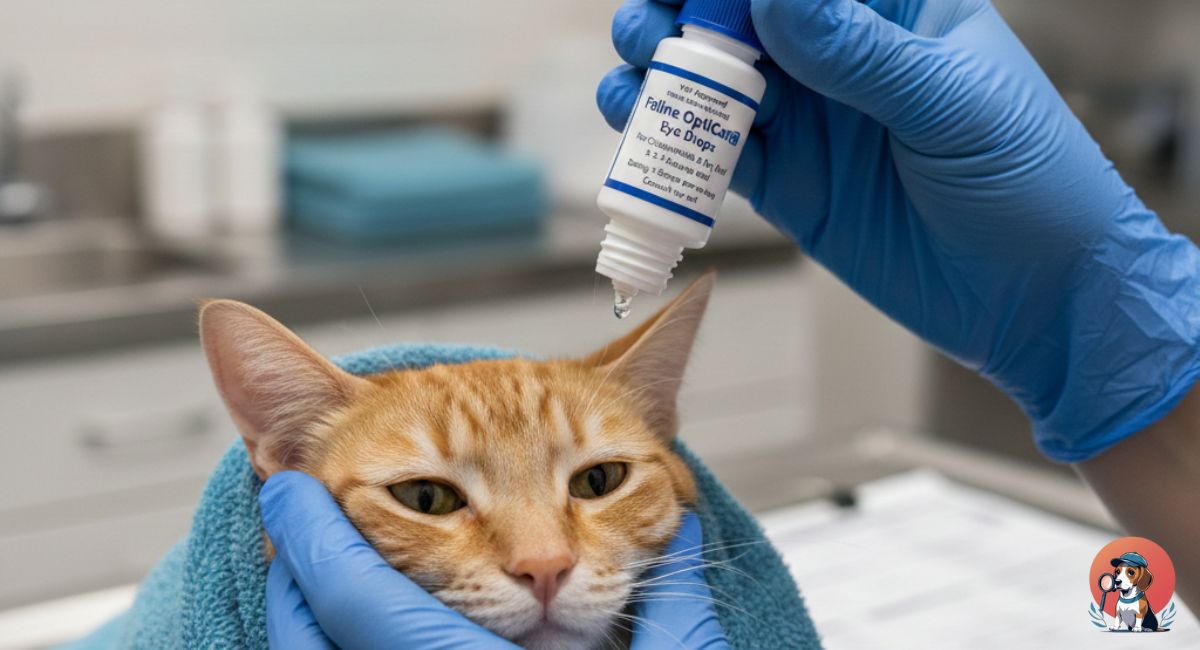
Choosing the right eye drops protects your cat’s eyesight and speeds recovery.
Key safety questions cat owners ask:
-
Can you use saline solution on cats?
Yes. Sterile saline is safe for gentle cleaning and mild irritation, but it does not treat infections. -
Kitten eye drops over the counter:
Some are safe for mild issues, but labels must clearly state whether they are for cats or kittens.
Eye Drop Comparison Table
| Eye Drop Type | Common Use | Safety Notes | Vet Prescription |
|---|---|---|---|
| Sterile Saline Solution | Cleaning, flushing debris | Safe for routine care | No |
| Antibiotic Drops | Bacterial infections | Use only as directed | Yes |
| Neomycin and polymyxin B sulfates for cats | Certain bacterial infections | Prescription only | Yes |
| Antiviral eye drops for cats | Viral infections | Must match diagnosis | Yes |
| Kitten eye drops over the counter | Mild irritation | Check ingredients carefully | Sometimes |
Can You Use Human Eye Drops on Cats?
Most human eye drops are NOT safe for cats.
Important warnings:
-
Do not use redness-relief drops
-
Avoid steroid drops unless prescribed
-
Preservatives may damage feline eyes
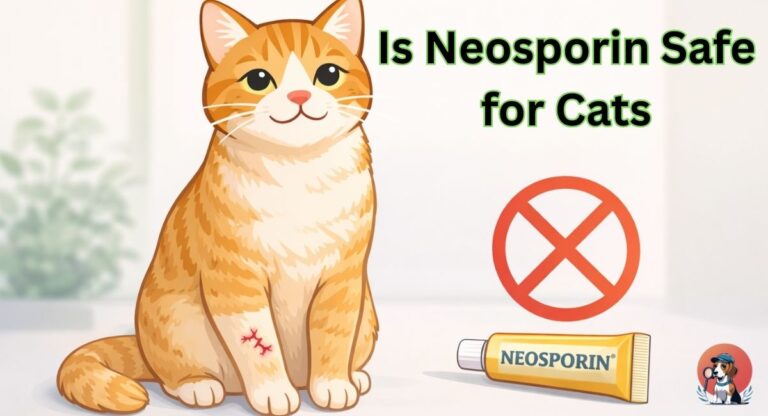
Is Neosporin safe for cats?
No. Neosporin is not made for the eyes and should never be used unless a veterinarian gives specific instructions.
Where Can I Get Eye Drops for Cats?
Safe sources include:
-
Veterinary clinics
-
Licensed online pet pharmacies
-
Pet stores (saline only)
Some kitten eye drops over the counter are acceptable, but never assume safety without reading the label.
How Do I Use Cat Eye Drops?
Correct use improves results and reduces stress.
General guidance:
-
Wash your hands before use
-
Clean discharge first
-
Apply only the number of drops advised
-
Follow the full treatment schedule
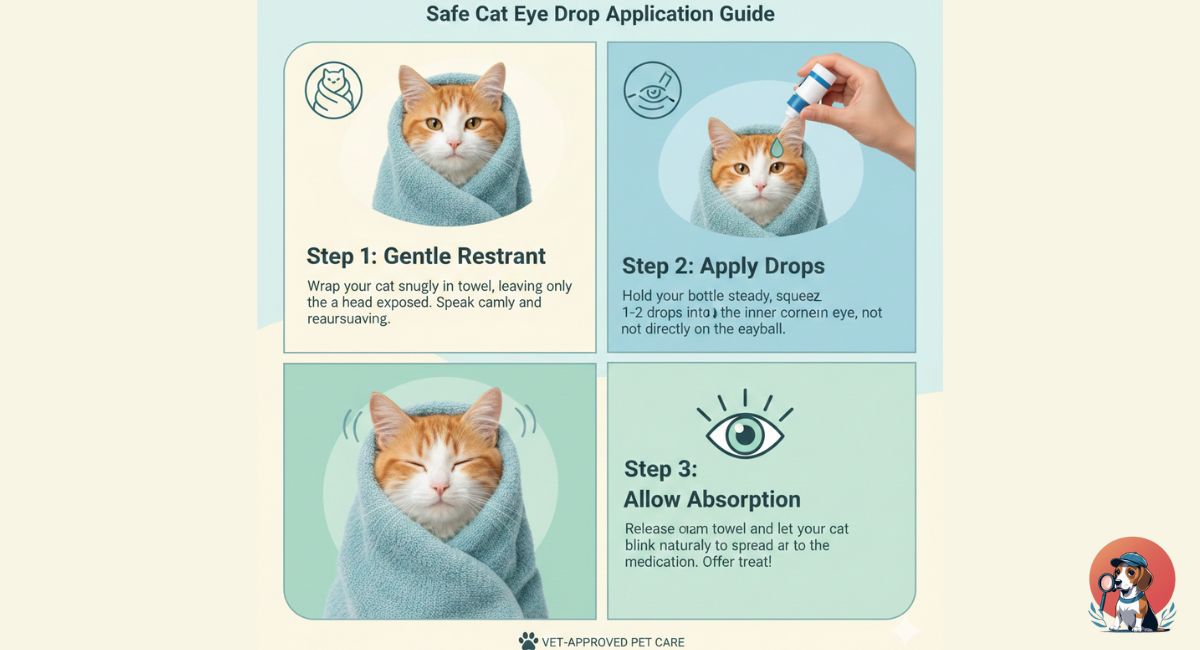
Applying Eye Drops to Cats
Good technique keeps the process safe and calm.
Helpful tips:
-
Gently wrap your cat in a towel
-
Aim for the inner eye corner
-
Let blinking spread the medication
What to Do if You Are Struggling to Apply Your Cat’s Eye Drops
Some cats resist eye treatment strongly.
Try:
-
Asking someone to help
-
Applying drops during calm moments
-
Using treats and praise
Stop if your cat is extremely stressed or aggressive.
Stress can slow healing.
7 Tips for Treating Cat Eye Infections
-
Use only vet-approved drops
-
Complete the full treatment
-
Clean eyes before each dose
-
Treat both eyes if instructed
-
Keep the dropper clean
-
Watch for improvement
-
Return to the vet if symptoms worsen
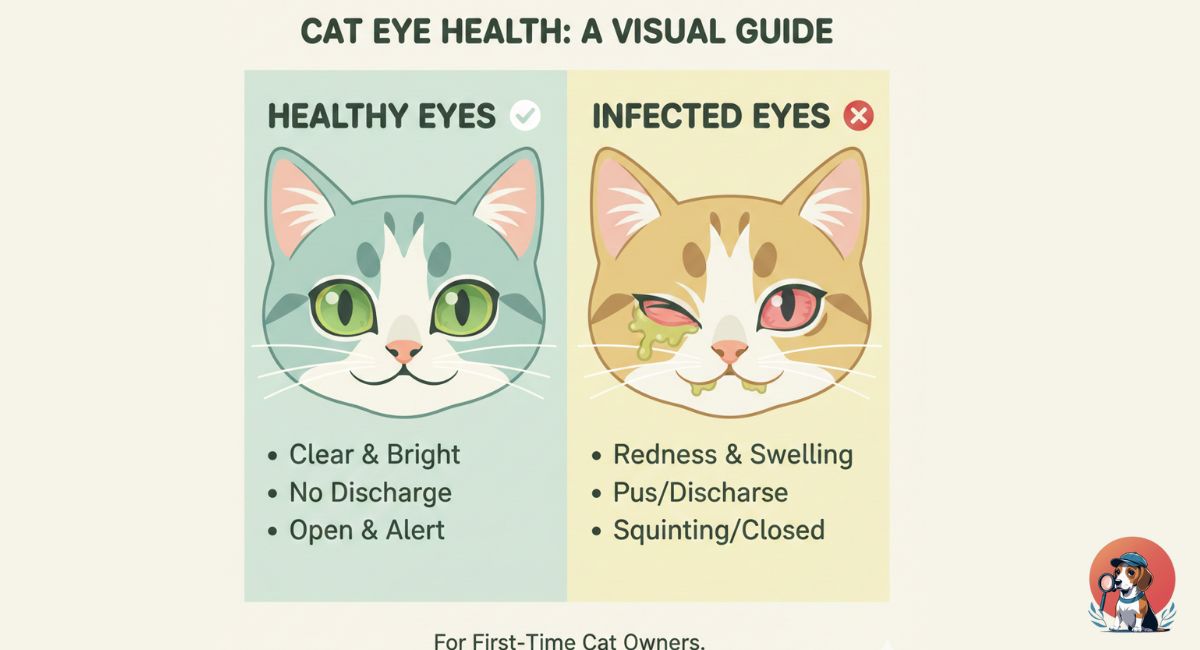
Know What Your Cat’s Eyes Should Look Like
Healthy cat eyes are:
-
Clear and bright
-
Free of thick discharge
-
Fully open
-
Equal in size
Don’t Diagnose on Your Own
Many eye conditions look alike but require different treatment.
Wrong medication may:
-
Delay healing
-
Worsen infection
-
Causes long-term eye damage
Let the Professionals Do Their Work
Veterinarians determine:
-
Infection type
-
Whether antibiotics are needed
-
If antiviral eye drops for cats are required
Expert care protects vision and prevents complications.
Know Your Treatment Options
Treatment may include:
-
Eye drops
-
Oral medication
-
Allergy control
-
Environmental changes
Minimize Stress by Knowing When to Quit
Pause treatment if you see:
-
Heavy breathing
-
Panic or aggression
-
Extreme fear
Ask your vet about gentler options.
What Not to Do
Avoid these common mistakes:
-
Using human eye drops
-
Sharing medications
-
Skipping doses
-
Using expired products
-
Touching the eye with the bottle
Small mistakes can cause serious harm.
Eye Drops and Cat Allergies (Combined Section)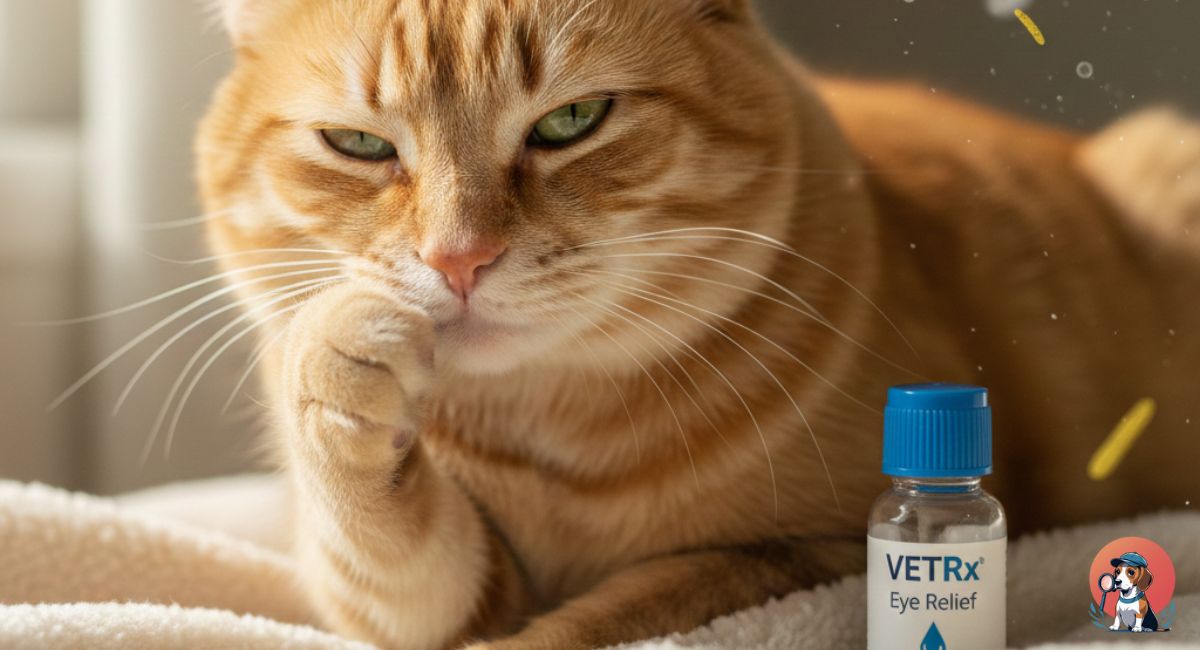
Eye drops can help manage allergy symptoms such as redness, itching, and watery eyes.
However, eye drops do not prevent allergic conjunctivitis on their own.
Best results come from combining:
-
Vet-approved eye drops
-
Cleaner indoor air
-
Reduced dust and pollen
-
Regular eye cleaning
What to Do if Your Cat Has Irritated Eyes
Start with gentle care:
-
Clean eyes with sterile saline
-
Monitor changes
-
Avoid human medications
-
Contact a vet if irritation continues
How an Online Vet Can Help With Your Cat’s Allergies
Online vets can:
-
Review symptoms and photos
-
Guide safe next steps
-
Help decide if in-person care is needed
This reduces delays and stress.
Preventive Eye Care for Cats
Preventing eye problems is easier than treating them.
Simple habits include:
-
Regular eye cleaning
-
Reducing allergens at home
-
Keeping litter dust-free
-
Scheduling routine vet checkups
Healthy habits protect long-term vision.
FAQs: Eye Drops Safe for Cats
Q1. What eye drops are safe for cats?
Eye drops safe for cats include sterile saline solutions, vet-prescribed antibiotic drops, and antiviral eye drops for cats when needed. The safest option depends on the underlying diagnosis, such as infection, allergy, or injury. Using eye drops without knowing the cause can delay healing, so veterinary guidance is important.
Q2. Can you use saline solution on cats’ eyes?
Yes, you can use sterile saline solution on cats to gently clean their eyes or flush out dust and debris. Saline is safe for routine eye cleaning, but it does not treat infections or inflammation. If symptoms continue, a veterinarian should examine your cat.
Q3. Is Neosporin safe for cats’ eyes?
No. Neosporin is not safe for cats’ eyes because it is not an eye medication. It is formulated for skin use, not the delicate tissues of the eye, and may cause irritation or damage unless a veterinarian specifically instructs otherwise.
Q4. Are Neomycin and polymyxin B sulfates safe for cats?
Neomycin and polymyxin B sulfates for cats can be safe and effective only when prescribed by a veterinarian. A prescription matters because these antibiotics target specific bacteria, and using them incorrectly may worsen the infection or cause eye irritation.
Q5. Are there kitten eye drops available over the counter?
Yes, some kitten eye drops over the counter are available, usually sterile saline or gentle cleaning solutions. Kittens’ eyes are more delicate than adult cats’, so products must be clearly labeled for kittens. Persistent discharge or redness always requires veterinary care.
Q6. Do eye drops help cats with allergies?
Yes, eye drops can help relieve allergy symptoms such as redness, itching, and watery eyes. They provide symptom relief, but they do not prevent allergic conjunctivitis. Long-term allergy control usually involves reducing allergens and working with a veterinarian on a broader treatment plan.
Conclusion: Eye Drops Safe for Cats
Choosing the right eye drops safe for cats is essential for protecting your cat’s comfort and vision. While mild issues may improve with sterile saline, infections and allergies often require vet-approved treatment. Human eye drops and home remedies can be risky and should be avoided. Most veterinarians agree that early diagnosis and proper medication are key to preventing long-term eye damage. Always observe your cat’s symptoms closely and follow veterinary advice exactly.