As a caring dog owner, you naturally want to share wholesome, healthy foods with your furry companion. Carrots often top that list—they’re colorful, crunchy, and famously nutritious. Rich in beta-carotene, fiber, and essential vitamins, they can support your dog’s vision, digestive health, and even dental hygiene. However, the key to safely unlocking these benefits lies in proper preparation. A whole carrot given without thought can pose a choking hazard or be difficult to digest. This veterinarian-informed guide will walk you through every step, from washing to serving, ensuring you can confidently offer this vibrant vegetable as a safe and beneficial treat that aligns with your dog’s unique needs.
Yes, carrots are a safe and nutritious treat for most dogs. They should be washed, peeled, and cut into bite-sized pieces appropriate for your dog’s size to prevent choking. You can serve them raw for dental benefits or cooked plain (steamed or boiled) for easier digestion. Remember, carrots are a treat and should follow the 10% rule, making up no more than 10% of your dog’s daily calorie intake.
How should carrots be prepared for dogs?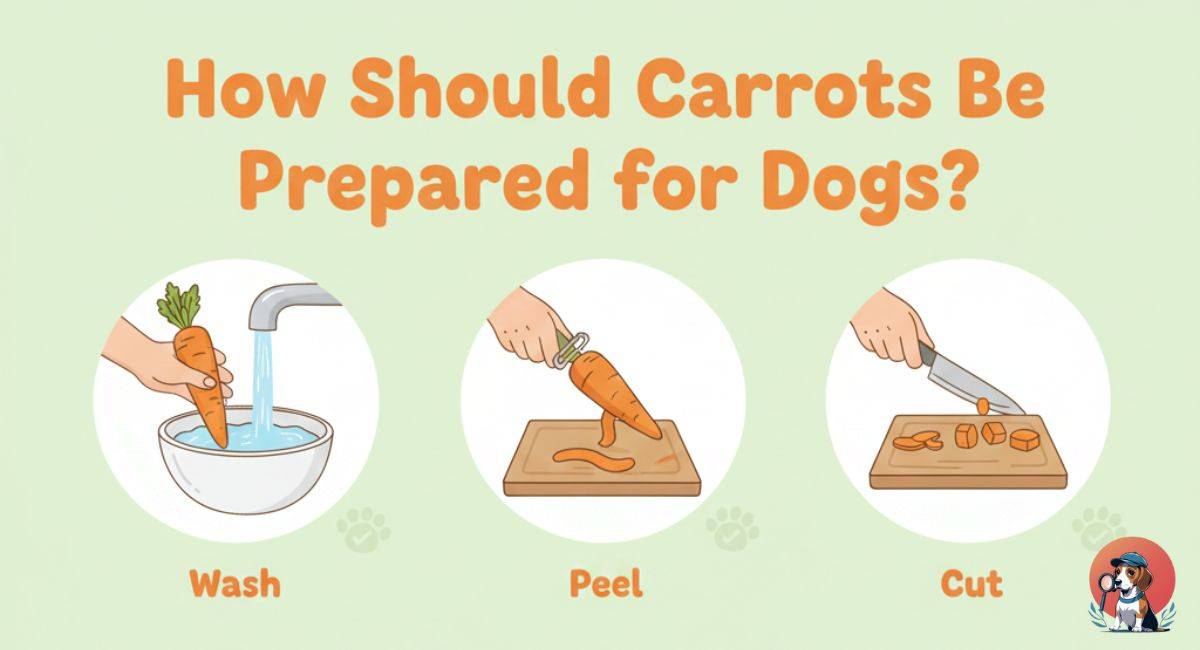
Proper preparation transforms carrots from a potential risk into a perfect snack. The core principles are safety, digestibility, and preserving nutritional value. Always start with fresh, firm carrots. Organic varieties can minimize pesticide exposure, but a thorough cleaning is mandatory for any carrot.
The goal is to create pieces that are easy to chew and swallow, significantly reducing the risk of choking or gastrointestinal blockage. Here is a step-by-step method for safe preparation:
-
Wash and Peel: Scrub the carrot vigorously under cool running water using a vegetable brush to remove all dirt and surface debris. Peeling is highly recommended as it removes the outer layer where residual pesticides or dirt may linger, making it easier for your dog to digest.
-
Cut to Appropriate Size: This is the most critical safety step. The piece should be based on your dog’s muzzle size and chewing style.
-
For large dogs, thick sticks or chunks may be suitable.
-
For medium dogs, cut sticks into shorter, bite-sized segments.
-
For small or toy breeds, finely dice or grate the carrot. A whole baby carrot is a choking hazard for a small dog.
-
-
Choose Raw or Cooked: Decide based on your dog’s needs (see detailed sections below). If cooking, steam or boil in plain water until soft. Never add salt, butter, oils, garlic, onions, or any seasonings.
-
Cool completely: If you’ve cooked the carrots, allow them to cool to room temperature before serving to avoid burning your dog’s mouth.
-
Introduce Slowly: Offer just one or two pieces initially to monitor your dog’s reaction and ensure they digest it well.
Are raw carrots safe for dogs?
Yes, raw carrots are generally safe for dogs and offer unique benefits. Their hard, crunchy texture acts as a natural toothbrush, helping to scrape plaque and tartar off teeth as your dog chews. This mechanical cleaning can contribute to better dental hygiene between brushings.
However, raw carrots come with specific risks that require owner vigilance:
-
Choking Hazard: This is the primary concern. A dog, especially an eager eater, may try to swallow a piece that is too large, leading to an obstruction in the throat or esophagus.
-
Dental Fracture: For dogs with weaker teeth, such as seniors or those with existing dental disease, biting down on an extremely hard piece can potentially lead to a cracked tooth.
-
Digestive Difficulty: The dense, fibrous structure of raw carrots can be challenging for some dogs to break down completely, potentially causing mild gas or stomach upset.
Safety Tip: Always supervise your dog when they are eating raw carrot pieces. Cutting them into appropriately sized shapes—not round slices—can greatly mitigate these risks.
Are cooked carrots better for dogs?
“Better” depends on your individual dog. Cooked carrots are not nutritionally superior, but they are often the more appropriate choice for many dogs. The cooking process, through steaming or boiling, softens the carrot’s cellular structure. This has several advantages:
-
Enhanced Digestibility: The softened fiber and starches are much easier for dogs to break down, making cooked carrots an excellent option for puppies, senior dogs, or those with sensitive stomachs.
-
Increased Bioavailability of Beta-Carotene: Cooking breaks down the carrot’s cell walls, making the beta-carotene (the antioxidant that converts to Vitamin A) more accessible for your dog’s body to absorb.
-
Safer for Dental Health: Soft, cooked carrots pose no risk of dental fracture and are easy to chew for dogs with missing or compromised teeth.
The key is to cook them plainly. Avoid any additives; your dog reaps the benefits from the carrot itself. Steaming is preferred over boiling to preserve more water-soluble vitamins.
How much carrot can a dog eat?
Moderation is essential. Despite their health benefits, carrots contain natural sugars and should be treated as a complementary snack, not a dietary staple. The widely accepted veterinary guideline is the 10% Treat Rule: all treats, including fruits and vegetables like carrots, should not exceed 10% of your dog’s total daily caloric intake. The remaining 90% should come from their complete and balanced primary diet.
General Portion Guidelines:
-
For a large dog (e.g., Labrador Retriever): 2-3 baby carrots or a half-cup of cooked pieces, 2-3 times per week.
-
For a medium dog (e.g., Beagle): 1-2 baby carrots or 3-4 tablespoons of cooked pieces, a few times a week.
-
For a small dog (e.g., Chihuahua): A few teaspoons of grated or cooked carrot is sufficient as an occasional treat.
Overfeeding carrots can lead to weight gain, digestive upset like diarrhea, or an unbalanced diet that lacks other essential nutrients.
Can puppies eat carrots?
Yes, puppies can enjoy carrots, but they require special considerations. Their developing teeth, smaller airways, and sensitive digestive systems need a gentler approach.
-
Preparation is Key: Puppies should only be given cooked carrots that have been softened significantly. Mash or puree the cooked carrot into a smooth consistency. For a raw option, use a fine grater to create a carrot “dust” that can be sprinkled over their food.
-
Size and Supervision: Never give a puppy a chunk of carrot. The choking risk is exceptionally high. Always supervise them during snack time.
-
Introduce Slowly: Start with a tiny amount (less than a teaspoon) mixed into their regular food. Monitor for the next 24 hours for any signs of allergic reaction or digestive intolerance, such as vomiting, diarrhea, or excessive gas.
When should dogs not eat carrots?
While carrots are a healthy choice for most, there are important exceptions where caution or avoidance is necessary:
-
Dogs with Diabetes: Due to their natural sugar content, carrots can affect blood glucose levels. Consult your veterinarian to determine if and how much carrots can be safely incorporated into a diabetic dog’s meal plan.
-
Dogs Prone to Choking or with Severe Dental Disease: For these dogs, avoid raw carrots entirely. Opt for a safely pureed or mashed cooked version.
-
Dogs with Specific Food Allergies or Sensitivities: Although uncommon, some dogs may be allergic to carrots. Introduce them slowly and watch for signs of itching, hives, or gastrointestinal distress.
-
If Prepared with Unsafe Ingredients: This bears repeating: carrots cooked with harmful additives like onions, garlic, xylitol, or excessive fats and salts are not safe for dogs.
When in doubt, your veterinarian is your best resource. Always seek their advice before introducing new foods to dogs with pre-existing health conditions.
Raw vs Cooked Carrots for Dogs: A Quick Comparison
| Aspect | Raw Carrots | Cooked Carrots |
|---|---|---|
| Pros | Excellent for dental plaque control; crunchy texture satisfies the chew instinct; retains maximum water-soluble vitamins like Vitamin C. | Softer, much easier to digest; higher bioavailability of beta-carotene (Vitamin A); safer for varied chewers and digestions. |
| Cons | Presents a choking hazard; risk of dental fracture; can be difficult for some dogs to digest fully. | Some loss of heat-sensitive vitamins during cooking; requires preparation time. |
| Best For… | Healthy, adult dogs with strong teeth and good chewing habits. | Puppies, senior dogs, and dogs with dental issues, sensitive stomachs, or a history of choking. |
FAQ: Carrots for Dogs
1. Can carrots help with my dog’s diarrhea?
Plain, cooked, mashed carrots can sometimes help manage mild diarrhea due to their soluble fiber (pectin), which can help firm up stools. However, they are not a treatment for underlying causes. Persistent diarrhea requires veterinary attention.
2. Do carrots improve my dog’s eyesight?
Carrots support overall eye and immune health because beta-carotene converts to Vitamin A, which is essential for vision. However, they will not cure existing eye conditions or dramatically improve normal eyesight.
3. Can I give my dog carrot tops or greens?
It is best to avoid them. Carrot tops are not highly toxic but can be bitter, may cause stomach upset in some dogs, and could contain nitrates and compounds that are harder to digest.
4. Are baby carrots safe for dogs?
Yes, but they are simply small, trimmed carrots. Wash them thoroughly and, for small dogs, cut them lengthwise to eliminate the round, choking-hazard shape.
5. Will carrots turn my dog’s skin or fur orange?
The condition called carotenemia is extremely rare in dogs. It would only occur from consuming excessively large quantities of carrots daily over a long period, far beyond the recommended treat portions.
Related Guides for Dog Owners
Exploring other human foods for your dog? Check out our other vet-informed guides:
Veterinary Note: This article is intended for informational and educational purposes only. It is based on general veterinary nutritional guidelines and is not a substitute for professional medical advice, diagnosis, or treatment. Always consult with your own veterinarian or a qualified veterinary nutritionist regarding any questions about your pet’s diet and health.
Last Updated: December 2025
This guide is part of our dog nutrition resource hub focused on safe, vet-informed feeding practices.