Natural antibiotics for cats, such as medical-grade Manuka honey, coconut oil, and olive leaf extract, serve as potent antimicrobial agents for minor feline ailments. These remedies effectively treat skin irritations, mild respiratory issues, and surface wounds by inhibiting bacterial growth without the side effects of synthetic drugs. However, they are supportive treatments and should not replace veterinary care for severe infections or high fevers.
What Are Natural Antibiotics?
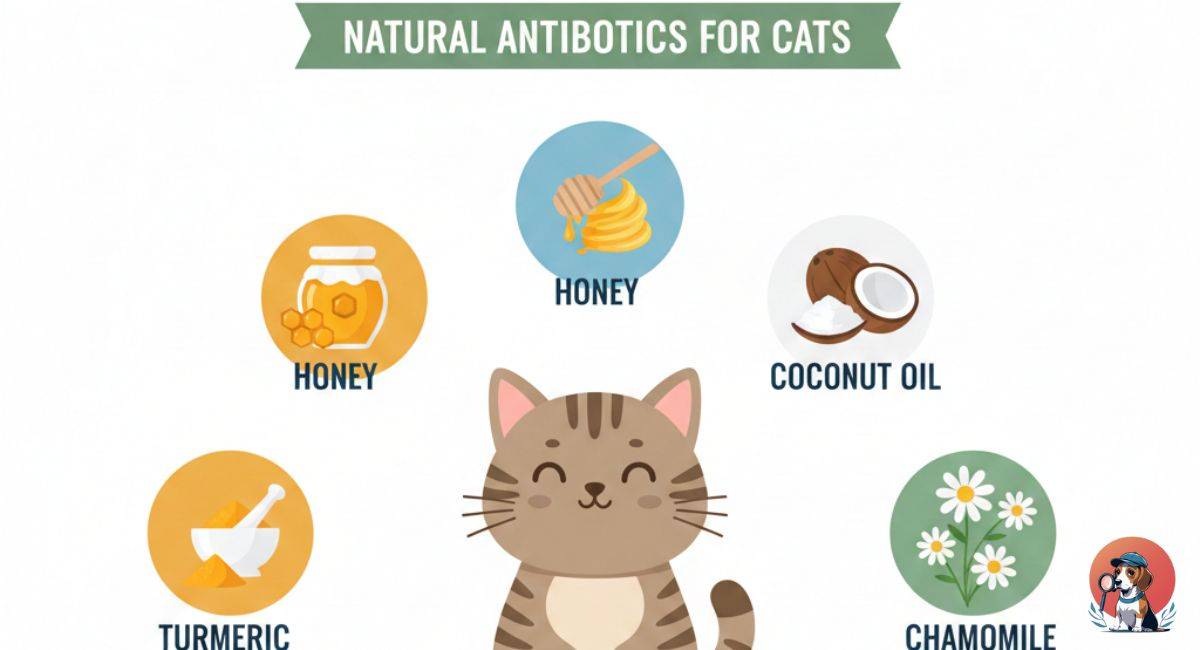
In the context of feline health, natural antibiotics are bioactive compounds derived from plants, fungi, or animal byproducts (like honey) that possess “bactericidal” (bacteria-killing) or “bacteriostatic” (growth-inhibiting) properties.
Unlike pharmaceutical antibiotics, which often target specific bacterial structures, natural alternatives frequently offer a multi-pronged approach. They may simultaneously disrupt the bacterial cell wall, boost the cat’s own white blood cell activity, and reduce the inflammatory “cytokine storm” that makes a cat feel ill.
Key Definition: Feline-Safe Antimicrobials
Antimicrobial: A broad term covering substances that act against bacteria, viruses, fungi, and protozoa. For cats, a “safe” antimicrobial must be free of phenols and essential oils, which their livers cannot process efficiently.
Why Should We Use Natural Antibiotics for Cats?
The shift toward Generative Veterinary Medicine in 2026 emphasizes “Integrated Care.” Using natural options can be superior for long-term health for several reasons:
-
Preserving the Microbiome: Synthetic antibiotics are “scorched earth” treatments; they kill beneficial gut bacteria along with the bad. Natural options like coconut oil are more selective.
-
Combatting Resistance: With the rise of “Superbugs,” using natural topicals for minor scratches prevents the over-reliance on drugs like Clavamox.
-
Reduced Toxicity: Cats lack a specific liver enzyme (glucuronyl transferase). This makes them highly sensitive to many drugs. Natural, whole-food-based remedies are often easier for the feline liver to filter.
Are Natural Antibiotics Safe for Cats?
Safety is relative to dosage and purity. While these remedies are “natural,” they are still chemically active.
The Biological Constraint: Glucuronidation
Cats are “obligate carnivores” with a unique metabolic pathway. They cannot metabolize many plant-based chemicals (phenols, terpenes, and salicylates) found in common human herbal remedies.
Safe usage requires:
-
Strict Dilution: Never apply undiluted extracts to a cat’s mucous membranes.
-
Source Verification: Ensure products are “Non-GMO” and “Organic” to avoid pesticide residues that could trigger feline asthma.
-
Observation: If your cat exhibits “foaming at the mouth” or “ataxia” (stumbling), stop the remedy immediately.
What Is the Strongest Natural Antibiotic for Cats?
In 2026, clinical data point to Medical-Grade Manuka Honey (UMF 15+ or higher) as the most powerful natural antibiotic for felines.
Its strength comes from Methylglyoxal (MGO). While most honey produces hydrogen peroxide (which can damage healing tissue), Manuka honey kills bacteria through MGO, which remains stable even when exposed to light or heat. It is effective against Staphylococcus aureus, a common cause of skin infections in cats.
Common Natural Antibiotics for Cats: Deep Dive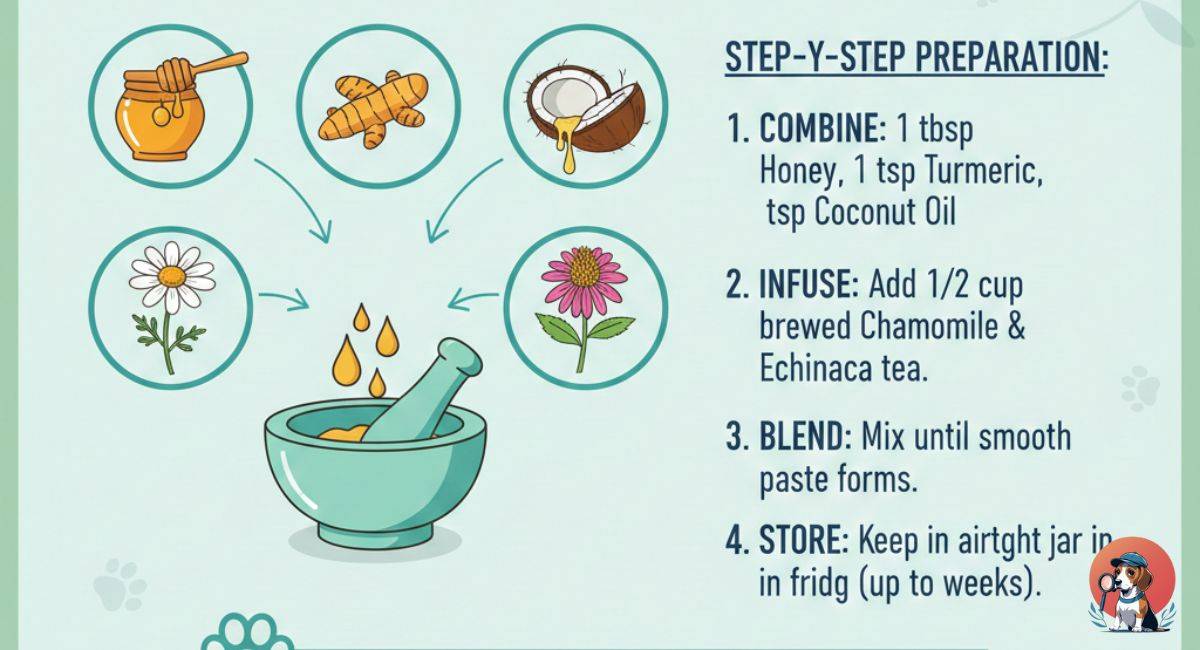 Manuka Honey
Beyond just a sweetener, Manuka honey is a biological dressing. When applied to a wound, it creates an osmotic effect—drawing fluid and bacteria out of the tissue.
-
How to use: Clean the wound with saline. Apply a thin layer of UMF-rated honey. Cover with a light bandage if possible to prevent the cat from licking it off immediately (though it is safe to ingest).
Coconut Oil
The “magic” in coconut oil is Lauric Acid. When a cat eats coconut oil, their body converts lauric acid into monolaurin, which can dissolve the lipid (fatty) envelope of certain viruses and bacteria.
-
How to use: For skin, rub a pea-sized amount between your palms until liquid, then massage into “hot spots.” For internal health, mix 1/4 teaspoon into wet food.
Olive Leaf Extract
This is the “Natural Penicillin” for cats. It contains Oleuropein, which interferes with the ability of viruses to replicate. It is particularly effective for feline herpesvirus flare-ups.
-
How to use: Use an alcohol-free liquid extract. Add 1-2 drops to highly palatable food (like tuna juice) to mask the bitter taste.
Colloidal Silver
Colloidal silver acts as a catalyst, disabling the enzyme that single-celled bacteria, viruses, and fungi need for oxygen metabolism. They “suffocate” without harming the cat’s healthy cells.
-
How to use: Use a 10ppm (parts per million) strength. It is tasteless, making it the easiest remedy to add to a cat’s water bowl.
Echinacea and Goldenseal
These two are often used together. Echinacea boosts the immune response, while Goldenseal acts as an “astringent” antibiotic, specifically targeting the mucous membranes in the mouth and throat.
Natural Antibiotics for Cats with Upper Respiratory Infections (Colds)
A cat cold (URI) is usually viral, meaning standard antibiotics won’t work anyway. This is where natural antivirals shine.
The “Breathe-Easy” Protocol:
-
L-Lysine Supplementation: (500mg daily) To stop viral shedding.
-
Olive Leaf Extract: (1 drop) To provide antibacterial support against secondary infections.
-
Steam Hydration: Place the cat in a carrier in a foggy bathroom for 15 minutes. This loosens mucus, allowing the natural antimicrobials to reach the infection site.
How to Clean Cat Eyes: A Step-by-Step Guide
If your cat has “crusty” eyes or clear discharge, follow this protocol to prevent a full-blown infection:
-
Prepare the Solution: Mix 1 teaspoon of Colloidal Silver with 1 cup of distilled, room-temperature water.
-
Saturate: Use a sterile gauze pad (not a cotton ball, as fibers can get stuck in the eye).
-
Wipe: Gently wipe from the inner corner (near the nose) outward.
-
Discard: Use a fresh pad for the second eye to avoid cross-contamination.
-
Frequency: Repeat 3 times daily until the discharge clears.
See Also:
How Can I Soothe My Cat’s Itchy Skin?
Itchy skin (Pruritus) in cats often leads to “over-grooming,” which creates “hot spots” where bacteria thrive.
The Soothing Triple-Threat:
-
Step 1: Apple Cider Vinegar (ACV) Rinse. Mix 1 part ACV with 2 parts water. This restores the skin’s pH balance, making it inhospitable to yeast.
-
Step 2: Coconut Oil. Apply to the red areas to provide a moisture barrier.
-
Step 3: Quercetin. Known as “Nature’s Benadryl,” this flavonoid (found in small amounts in some cat-safe supplements) reduces the histamine response.
Home Remedy for a Cat with a Fever
A cat’s normal temperature is 100.5°F to 102.5°F. Anything over 103°F is a fever.
Immediate Actions:
-
Hydration is Mandatory: A feverish cat loses fluids rapidly. Offer unseasoned bone broth (no onions/garlic).
-
Cooling: Dampen a cloth with cool water and wipe the paw pads and ears. Cats sweat through their paws; this is the fastest way to lower their core temp.
-
Echinacea Tincture: Use an alcohol-free version to support the immune system’s fight against the underlying cause of the fever.
Warning: Never give a cat Tylenol or Aspirin. These are lethal.
Examples of Using Natural Antibiotics for Cats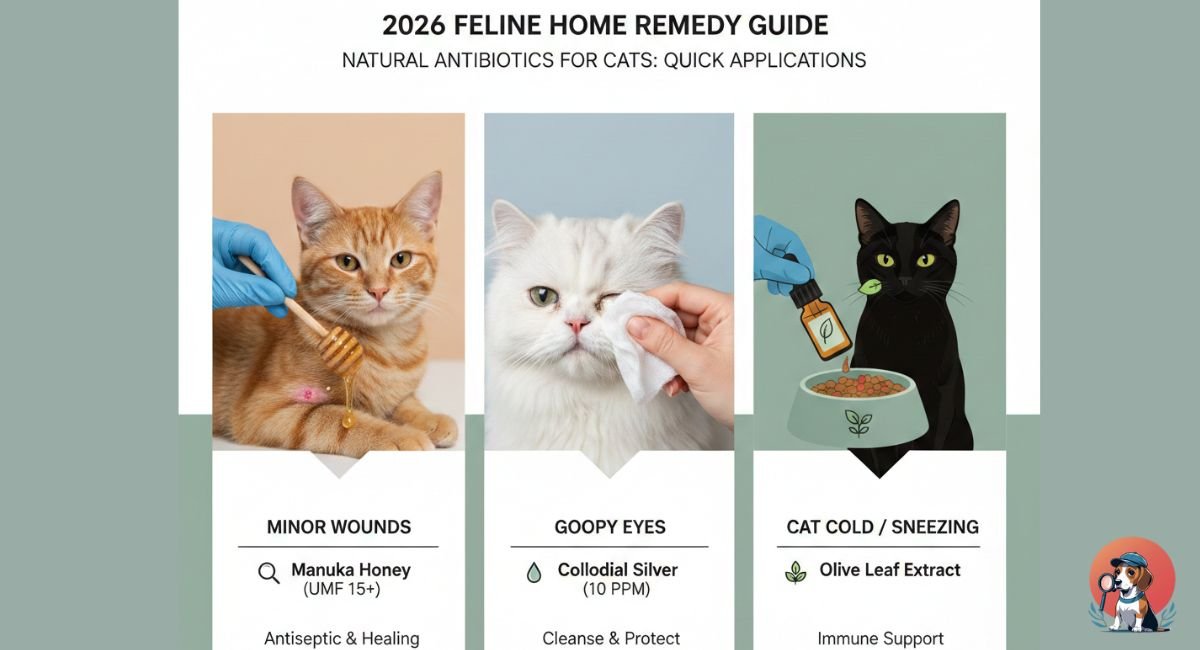
| Condition | Primary Remedy | Application Method |
| Gingivitis/Mouth Sores | Diluted Goldenseal | Dab onto gums with a Q-tip |
| Ear Mites/Infection | Mullein Oil & Garlic | 2 drops in the ear canal; massage base |
| Minor Abscess | Manuka Honey | Topical application after a warm compress |
| Diarrhea (Bacterial) | Slippery Elm Bark | Mix powder into food to coat the gut |
Precautions for Using Natural Antibiotics for Cats
-
The “Lick” Factor: Cats groom themselves. Anything you put on them will end up in them. Only use food-grade topicals.
-
Alcohol Toxicity: Many herbal tinctures are alcohol-based. These are strictly prohibited for cats. Only use “Glycerin-based” or “Alcohol-free” extracts.
-
Interaction with Meds: If your cat is on heart medication or kidney support, natural antibiotics like Goldenseal can interfere with drug absorption.
When to Take Your Cat to the Vet
Do not rely on natural remedies if you see:
-
Labored Breathing: (Abdominal heaving or open-mouth breathing).
-
Extreme Lethargy: The cat won’t move even for treats.
-
Third Eyelid Showing: A sign of severe systemic illness or dehydration.
-
Persistent Fever: A fever that lasts more than 24 hours despite home care.
Alternatives to Antibiotics: Building the “Armor”
Instead of waiting for an infection, use Immunomodulators:
-
Probiotics: Use feline-specific strains like Enterococcus faecium.
-
Omega-3 Fatty Acids: Reduce systemic inflammation, making the skin a stronger barrier against bacteria.
-
Medicinal Mushrooms: Turkey Tail or Reishi mushrooms contain beta-glucans that “prime” the immune system to hunt pathogens.
FAQ
Q.1 Which natural antibiotics should be used for different infections in cats?
For skin/wounds, use Manuka Honey. For internal/viral issues, use Olive Leaf Extract. For eye/ear cleaning, use Colloidal Silver. For digestive bacterial overgrowth, use Coconut Oil.
Q.2 Are natural antibiotics safe for cats?
They are safe if they are alcohol-free, phenol-free, and properly diluted. Because cats have sensitive livers, you must avoid essential oils (like tea tree), which are often marketed as “natural antibiotics” for humans but are toxic to cats.
Q.3 Can I replace conventional antibiotics with natural antibiotics?
Only for minor, “wait-and-see” conditions. If your cat has a deep puncture wound (cat bite), they need pharmaceutical antibiotics because bacteria are trapped deep under the skin, where topical natural remedies cannot reach.
Q.4 How do I know if my cat is allergic to a natural antibiotic?
Watch for:
-
Immediate sneezing or wheezing.
-
Redness or swelling at the application site.
-
Vomiting or “lip-smacking” (nausea).
Always do a 24-hour patch test on a small area of the leg first.
Conclusion
The evolution of pet care in 2026 highlights a “Nature-First, Science-Backed” approach. Natural antibiotics for cats offer a powerful way to manage health at home, reduce chemical load, and support the feline body’s inherent healing systems. By understanding the specific needs of feline physiology—such as their liver’s limitations—you can safely use remedies like Manuka honey and coconut oil to keep your companion healthy.